Author: admin

  • Breaking Down the Numbers: How Much Does CRM Software Cost in 2024?

    Breaking Down the Numbers: How Much Does CRM Software Cost in 2024?

    If you’re wondering, “how much does CRM software cost?”, you’re not alone! It’s one of the most common questions businesses ask when considering a Customer Relationship Management (CRM) system. A good CRM can be a game-changer for managing customer interactions, streamlining sales, and boosting marketing efforts. However, the price tag can vary wildly, making it tough to budget. Let’s dive into what influences CRM costs and help you understand what to expect.

    What Exactly Is a CRM System and Why Do You Need One?

    Before we talk about pricing, let’s quickly recap. A CRM system helps businesses manage and analyze customer interactions and data throughout the customer lifecycle, with the goal of improving business relationships with customers, assisting in customer retention, and driving sales growth. From tracking leads to managing customer service, it’s a central hub for all things customer-related.

    Factors Influencing CRM Software Costs

    So, how much does CRM software cost? The answer isn’t a simple number, as many factors come into play. Understanding these elements will help you estimate your potential investment.

    1. Deployment Type: Cloud vs. On-Premise

    • Cloud-based CRM (SaaS): This is the most popular option. You pay a subscription fee (usually monthly or annually) to use the software hosted by the vendor.

    * Pros: Lower upfront costs, easy setup, automatic updates, accessible from anywhere.
    * Cons: Less control over data, dependent on internet connection, ongoing subscription fees.

    • On-premise CRM: You purchase the software license and host it on your own servers.

    * Pros: Full data control, high customization, one-time license fee.
    * Cons: High upfront costs, requires IT staff for maintenance and updates, less flexibility.

    2. Features and Functionality

    Basic CRM packages often include contact management, lead tracking, and reporting. More advanced features like marketing automation, sales forecasting, project management, AI capabilities, and advanced analytics will naturally increase the cost. Think about what your business truly needs versus what would be ‘nice to have’.

    3. Number of Users

    Most CRM vendors price their software on a per-user, per-month basis. The more team members who need access, the higher your total monthly or annual bill will be. Some vendors offer volume discounts, so always ask!

    4. Customization and Integration

    Does your CRM need to talk to other software you use, like your accounting system or email marketing platform? Integrations can add to the cost, especially if they require custom development. Similarly, tailoring the CRM to fit your unique workflows might incur additional setup or development fees.

    5. Support and Training

    Basic support is usually included, but premium support (24/7, dedicated account manager) often comes with an extra charge. Don’t forget training costs for your team; a powerful CRM is useless if nobody knows how to use it effectively!

    A diverse group of business professionals in a modern office looking at a CRM dashboard on a large screen, discussing data and collaborating. The image should convey teamwork and technology usage.

    Common CRM Pricing Models

    Now that we know what influences the price, let’s look at how vendors typically structure their pricing when you ask, “how much does CRM software cost?”

    Per-User, Per-Month

    This is the most common model. You pay a set fee for each user who accesses the system, usually billed monthly or annually.
    Example*: $25/user/month for a basic plan, $75/user/month for an enterprise plan.

    Tiered Pricing

    Vendors often offer different “tiers” or “editions” (e.g., Starter, Professional, Enterprise). Each tier comes with an increasing set of features and capabilities, and a corresponding higher price point.
    Starter/Basic*: Essential features for small businesses.
    Professional*: More robust sales and marketing tools.
    Enterprise*: Comprehensive features, advanced analytics, highest level of customization and support for large organizations.

    Flat Rate or Enterprise Plans

    Some large-scale or highly customized solutions might come with a flat rate, especially for very large organizations or specific industry solutions. This usually involves a comprehensive package deal.

    Don’t Forget the Hidden Costs!

    When calculating how much CRM software costs, it’s easy to overlook some less obvious expenses:

    • Implementation Fees: Getting the system set up and data migrated.
    • Integration Costs: Connecting with other business tools.
    • Data Migration: Moving your existing customer data into the new CRM.
    • Add-ons and Premium Features: Special modules or advanced reporting.
    • Training: Ensuring your team can actually use the software.
    • Maintenance and Upgrades: Especially for on-premise solutions.

    A person looking thoughtfully at a complex infographic showing various costs associated with CRM software, including subscriptions, implementation, training, and integrations, displayed with a clean, professional design.

    Tips for Choosing the Right CRM (and Budget)

    1. Assess Your Needs: What problems do you need the CRM to solve? What features are essential?
    2. Start Small, Scale Up: Many CRMs allow you to start with a basic plan and add features or users as your business grows.
    3. Read the Fine Print: Understand all costs, including hidden fees, implementation, and support.
    4. Trial Periods: Take advantage of free trials to test features and user-friendliness before committing.
    5. Get Quotes: Don’t settle for the first price you see. Get multiple quotes and compare.

    Conclusion

    So, how much does CRM software cost? As you can see, there’s no single answer. Prices can range from free (for very basic versions) to hundreds or even thousands of dollars per user per month for enterprise-grade solutions. The key is to remember that the total CRM software cost isn’t just the subscription fee; it includes implementation, training, and potential integrations. By carefully evaluating your business needs, understanding the various pricing models, and accounting for potential hidden costs, you can make an informed decision and find a CRM that fits both your requirements and your budget. Happy customer managing!
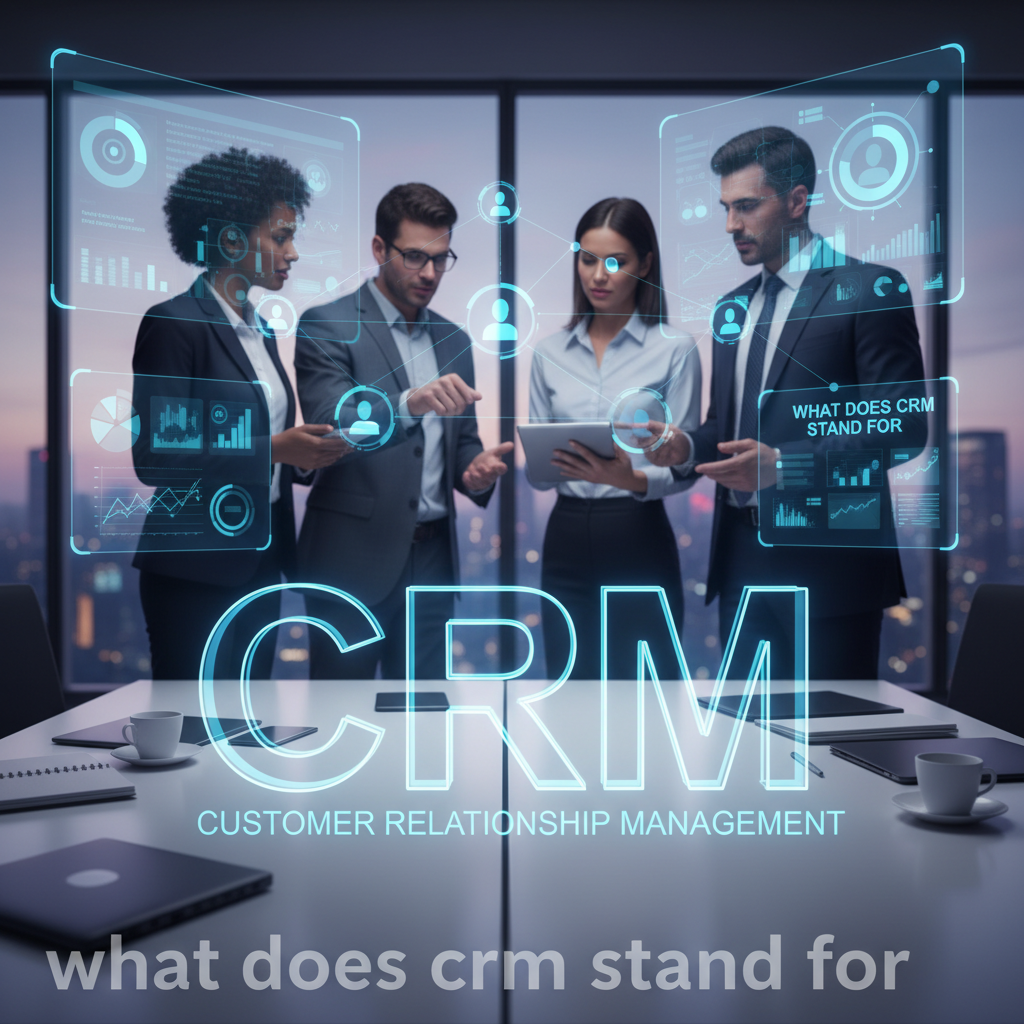

  • What Does CRM Stand For? Unpacking Customer Relationship Management for Your Business

    What Does CRM Stand For? Unpacking Customer Relationship Management for Your Business

    Ever wondered what does CRM stand for when you hear businesses talk about it? You’re not alone! It’s a term thrown around quite a bit, especially in the business world, and understanding it can unlock a world of benefits for your company, no matter its size. Simply put, CRM is about building and nurturing strong relationships with your customers, and using technology to make that process super efficient and effective. Let’s dive in and demystify this powerful concept.

    So, What Exactly Does CRM Stand For?

    Alright, let’s get straight to the point. CRM stands for Customer Relationship Management. It’s a strategy, a process, and often, a technology that companies use to manage and analyze customer interactions and data throughout the customer lifecycle. The goal? To improve business relationships with customers, assist in customer retention, and drive sales growth.

    Think of it as your company’s digital brain for all things customer-related. It’s designed to compile information from a range of different communication channels, including a company’s website, telephone, email, live chat, marketing materials, and social media. A good CRM system allows businesses to learn more about their target audiences and how to best cater to their needs. This helps you:

    • Organize Customer Data: Keep all customer information in one centralized place.
    • Track Interactions: Log every call, email, meeting, and purchase.
    • Automate Tasks: Streamline repetitive tasks like sending follow-up emails.
    • Analyze Performance: Understand what’s working and what’s not in your customer engagement.

    Why is CRM So Important for Your Business?

    In today’s competitive landscape, knowing your customers isn’t just a nice-to-have; it’s a must-have. A robust CRM system can transform how you interact with your clientele, leading to happier customers and a healthier bottom line.

    Enhanced Customer Satisfaction

    When you have all the information about a customer at your fingertips – their purchase history, previous interactions, and preferences – you can provide personalized and prompt service. This makes customers feel valued and understood, significantly boosting their satisfaction and loyalty.

    Streamlined Business Processes

    CRM tools automate many routine tasks, freeing up your sales, marketing, and customer service teams to focus on more strategic activities. Imagine sales reps spending less time on data entry and more time building relationships!

    Improved Data Organization

    No more scattered spreadsheets or lost notes! A CRM centralizes all customer data, making it easily accessible to anyone in your organization who needs it. This consistent data source ensures everyone is on the same page.

    Better Sales and Marketing Strategies

    With detailed insights into customer behavior and preferences, your marketing campaigns can be highly targeted, leading to better conversion rates. Sales teams can identify hot leads faster and tailor their pitches for maximum impact.

    A diverse team of smiling business professionals collaborating in a modern office, looking at a shared screen displaying a CRM dashboard with graphs and customer data. The atmosphere is productive and positive. Photorealistic.

    Different Flavors of CRM Systems

    Not all CRM systems are created equal. They often come with different focuses to meet specific business needs. Understanding the main types can help you decide what might be best for your operation:

    • Operational CRM: Focuses on automating customer-facing processes like sales, marketing, and customer service. It streamlines operations that deal directly with customers.
    • Analytical CRM: Concentrates on collecting and analyzing customer data to gain deeper insights into customer behavior. This helps in making better business decisions, segmenting customers, and predicting trends.
    • Collaborative CRM: Aims to improve communication and information sharing between different departments within a company. It ensures that all teams have access to the same customer information, promoting a unified customer experience.

    Who Uses CRM and How?

    CRM isn’t just for big corporations; small and medium-sized businesses (SMBs) are increasingly adopting it too! Anyone who interacts with customers, whether directly or indirectly, can benefit. This includes:

    • Sales Teams: To manage leads, track opportunities, and automate sales tasks.
    • Marketing Teams: To run targeted campaigns, segment audiences, and measure campaign effectiveness.
    • Customer Service Teams: To handle inquiries, resolve issues, and provide support efficiently.
    • Business Owners: To get a 360-degree view of their business performance and customer base.

    From a freelance consultant managing client projects to a global e-commerce giant handling millions of transactions, CRM helps businesses keep their customer relationships strong and their operations smooth.

    A small business owner sitting at a desk, looking intently at a tablet displaying a user-friendly CRM interface with customer profiles and recent interactions. A cup of coffee and a notebook are nearby. Soft, natural lighting. Photorealistic.

    Getting Started with CRM: What to Consider

    If you’re thinking about implementing a CRM, here are a few quick tips:

    1. Define Your Needs: What problems are you trying to solve?
    2. Research Options: There are many CRM platforms out there (Salesforce, HubSpot, Zoho CRM, etc.).
    3. Start Simple: You don’t need all the bells and whistles from day one.
    4. Train Your Team: Proper training is crucial for successful adoption.

    Conclusion

    So, now you know that what does CRM stand for isn’t just a technical acronym, but a fundamental business strategy focused on strengthening customer relationships. By leveraging CRM technology, businesses can gain invaluable insights, streamline operations, and ultimately foster customer loyalty and drive growth. It’s a game-changer for anyone looking to put their customers at the heart of their business strategy. Happy relationship building!