Category: Business

  • Unlocking Growth: Essential CRM Benefits for Small Businesses You Need to Know!

    Unlocking Growth: Essential CRM Benefits for Small Businesses You Need to Know!

    Unlocking Growth: Essential CRM Benefits for Small Businesses You Need to Know!

    Running a small business is a thrilling adventure, but it comes with its own set of challenges. Keeping track of customer interactions, sales leads, and marketing efforts can quickly become overwhelming. That’s where Customer Relationship Management (CRM) systems step in. If you’ve been wondering how to give your small business an edge, understanding the core CRM benefits for small businesses is your next big step.

    What Exactly is CRM?

    Simply put, a CRM system is a technology solution that helps you manage all your company’s relationships and interactions with customers and potential customers. The goal is simple: improve business relationships to grow your business. It’s not just a fancy database; it’s a strategic tool designed to streamline processes, enhance customer satisfaction, and drive profitability.

    Diving Deep into CRM Benefits for Small Businesses

    Let’s break down why investing in a CRM can be a game-changer for your growing enterprise.

    Build Stronger Customer Connections

    One of the most significant CRM benefits for small businesses is the ability to truly know your customers. A CRM centralizes all customer data – their history, preferences, past purchases, and communications. This means you can personalize every interaction, making customers feel valued and understood, which in turn fosters loyalty and repeat business.

    A small business owner smiling while looking at a laptop screen displaying customer profiles and interaction history, with a happy customer icon in the background, in a modern office setting, photorealistic.

    Supercharge Your Sales Pipeline

    CRM systems are incredible for sales teams. They help you manage leads efficiently, track their journey through the sales funnel, and identify opportunities for upselling or cross-selling. With automated reminders and clear visibility into each deal’s status, your sales reps can focus on selling, not on administrative tasks.

    Deliver Exceptional Customer Service

    Imagine quickly resolving customer queries because all their information is at your fingertips. CRM enables faster, more consistent customer support. Service agents can instantly access conversation history, past issues, and purchase details, leading to quicker resolutions and happier customers. This consistency is a huge one among the CRM benefits for small businesses.

    Master Your Data, Gain Insights

    Goodbye, messy spreadsheets! A CRM provides a centralized repository for all your customer data. This organization isn’t just neat; it allows for powerful reporting and analytics. You can gain valuable insights into customer behavior, sales performance, and marketing effectiveness, helping you make data-driven decisions for your business’s future.

    Optimize Your Marketing Campaigns

    With detailed customer segmentation based on demographics, purchase history, and engagement, your marketing efforts become incredibly targeted. CRM allows you to create highly personalized campaigns that resonate with specific customer groups, leading to higher conversion rates and a better return on investment for your marketing spend.

    Boost Team Productivity

    Automation is a key feature of modern CRM systems. From sending follow-up emails to scheduling appointments, many routine tasks can be automated, freeing up your team’s time. This means less manual data entry, fewer errors, and more time for strategic work, significantly boosting overall productivity.

    A diverse team of small business employees collaborating efficiently around a table, each looking at their own device, with subtle digital lines connecting them to symbolize a streamlined workflow, bright and modern office, photorealistic.

    Pave the Way for Future Growth

    As your small business expands, a CRM scales with you. It ensures that your customer management processes remain consistent and efficient, no matter how many customers you acquire. This foundation for growth is perhaps one of the most strategic CRM benefits for small businesses, allowing you to maintain a high level of customer experience even as you grow.

    Finding Your Perfect CRM Fit

    Choosing the right CRM for your small business involves evaluating your specific needs, budget, and desired features. There are many affordable and user-friendly options designed specifically for small and medium-sized businesses, so take the time to research and find one that aligns with your goals.

    Ready to Reap the Rewards?

    The CRM benefits for small businesses are clear and compelling. From enhancing customer relationships and streamlining sales to providing invaluable data insights and boosting productivity, a CRM system is no longer a luxury but a crucial tool for sustained growth and success in today’s competitive market. Don’t wait to give your small business the competitive edge it deserves!


  • Boost Customer Satisfaction with CRM: Your Ultimate Guide to Happier Clients

    Boost Customer Satisfaction with CRM: Your Ultimate Guide to Happier Clients

    In today’s competitive market, keeping your customers happy isn’t just a goal; it’s the cornerstone of long-term success. Happy customers become loyal customers, and loyal customers drive growth. So, how do you consistently deliver experiences that delight? The answer often lies in smart technology, specifically by leveraging a Customer Relationship Management (CRM) system. Learning how to boost customer satisfaction with CRM can transform your business, turning casual buyers into passionate advocates.Let’s dive into how CRM can be your secret weapon for creating an exceptional customer journey.## What is CRM and Why Does It Matter for Customer Satisfaction?A CRM system is more than just a contact list; it’s a comprehensive platform designed to manage all your company’s interactions with current and potential customers. From sales and marketing to customer service, CRM centralizes customer data and streamlines processes. For customer satisfaction, this means a consistent, personalized, and efficient experience every single time.### Centralized Customer DataImagine having every piece of information about a customer—their purchase history, preferences, past interactions, and even their birthday—all in one easily accessible place. That’s what a CRM provides. This centralized data eliminates the frustration of customers having to repeat themselves to different departments, making every interaction smoother and more informed.### Streamlined CommunicationCRM helps standardize and streamline communication across all touchpoints. Whether a customer is reaching out via email, phone, social media, or live chat, their history is instantly available. This ensures that every team member can pick up where the last left off, providing a seamless and professional experience. It’s a huge step towards consistency and efficiency.

    A diverse team of customer service agents smiling and working collaboratively at a modern call center, each looking at their computer screens displaying CRM dashboards with customer profiles and communication history. The setting is bright and professional.

    ## Key Ways CRM Helps Boost Customer SatisfactionCRM isn’t just about organizing data; it’s about using that data to proactively enhance customer experiences. Here are some critical ways it helps:### Personalized ExperiencesNo one likes feeling like just another number. CRM allows you to personalize every interaction. With detailed customer profiles, you can address customers by name, recommend products based on past purchases, and send tailored offers that truly resonate with their needs and interests. This level of personalization makes customers feel valued and understood.### Faster Problem ResolutionWhen an issue arises, customers want a quick and effective solution. CRM equips your support team with instant access to customer history, relevant case details, and common solutions. This significantly reduces resolution times, minimizes customer effort, and turns potentially negative experiences into positive ones.### Proactive EngagementCRM helps you anticipate customer needs and engage proactively. By tracking customer behavior and purchase patterns, you can identify potential issues before they escalate or offer timely information that adds value. For instance, sending a reminder for a service renewal or a useful tip related to a recent purchase can go a long way in building trust.### Gathering Valuable FeedbackA good CRM system can also facilitate the collection and analysis of customer feedback. Through surveys, feedback forms, and interaction logging, you can gain insights into what’s working well and what needs improvement. This continuous feedback loop is crucial for refining your services and proving to customers that their opinions matter.

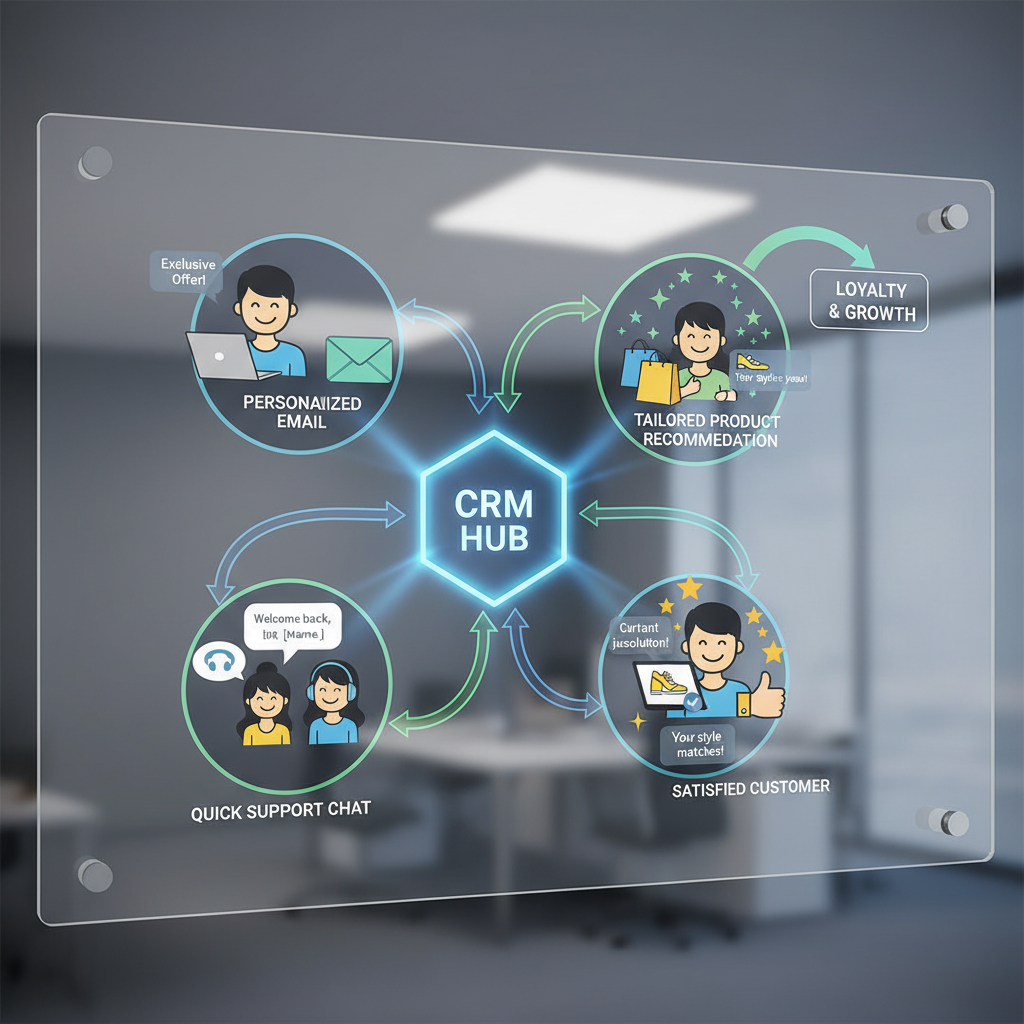
    A vibrant infographic illustrating the journey of a satisfied customer, showing seamless interaction points (e.g., personalized email, quick support chat, tailored product recommendation) powered by a CRM system. Elements like smiling customer icons, data flow lines, and a central CRM hub should be visually prominent and engaging.

    ## Choosing the Right CRM for Your BusinessTo truly boost customer satisfaction with CRM, it’s important to choose a system that fits your business needs. Consider factors like scalability, integration capabilities with other tools (like marketing automation or accounting software), ease of use, and, of course, your budget. A well-chosen CRM becomes an invaluable asset.## ConclusionImplementing a CRM system is a strategic investment in your customer relationships. By centralizing data, streamlining communication, enabling personalization, and facilitating proactive engagement, CRM empowers your business to deliver outstanding experiences. Embrace CRM, and you’ll not only boost customer satisfaction with CRM but also foster loyalty, encourage repeat business, and ultimately drive sustainable growth.