
Category: Business Technology

  • Demystifying CRM Software Pricing Comparison: Finding the Best Deal for Your Business

    Demystifying CRM Software Pricing Comparison: Finding the Best Deal for Your Business

    So, you’re on the hunt for a Customer Relationship Management (CRM) system, and let’s be honest, trying to make sense of all the different options and their price tags can feel like solving a really complex puzzle. That’s where a solid CRM software pricing comparison comes into play. It’s not just about finding the cheapest option; it’s about finding the best value that aligns perfectly with your business needs without breaking the bank. Let’s dive into how to navigate this often-confusing landscape.

    Why CRM Software Pricing Comparison Matters

    Ignoring the specifics of CRM pricing can lead to overspending on features you don’t need or, worse, underspending and ending up with a system that can’t grow with you. A thorough CRM software pricing comparison helps you identify solutions that offer the right balance of functionality and affordability. Think of it as investing in a tool that will empower your sales, marketing, and customer service teams, ultimately driving revenue and improving customer satisfaction.

    Key Factors Influencing CRM Pricing

    When you’re doing your CRM software pricing comparison, you’ll quickly notice that prices aren’t one-size-fits-all. Several factors contribute to the final cost:

    Number of Users

    Most CRM vendors use a per-user, per-month pricing model. This means the more team members who need access to the CRM, the higher your monthly or annual bill will be. It’s crucial to accurately assess how many users will truly benefit from the system to avoid unnecessary costs.

    Feature Sets and Editions

    CRM platforms often come in various editions, like ‘Standard,’ ‘Professional,’ ‘Enterprise,’ or ‘Ultimate.’ Each tier unlocks more advanced features, integrations, and customization options. While a basic package might cover lead management and contact tracking, higher tiers could include advanced analytics, marketing automation, AI capabilities, or robust reporting. Always compare the features offered in each tier during your CRM software pricing comparison.

    Customization & Integrations

    Does your business have unique workflows or require deep integration with other tools you already use (like accounting software or email marketing platforms)? Some CRMs charge extra for advanced customization capabilities or for connecting to third-party applications. Ensure you factor these potential add-ons into your budget.

    Support and Training

    While basic support might be included, premium support (think 24/7 phone access, dedicated account managers, or faster response times) often comes at an additional cost. If your team needs extensive training or quick, expert assistance, investigate the pricing for enhanced support packages.

    Contract Length

    Opting for an annual contract often provides a discount compared to monthly billing. If you’re confident in your CRM choice, committing for a longer term can save you money. However, if you’re still testing the waters, a monthly plan offers more flexibility.
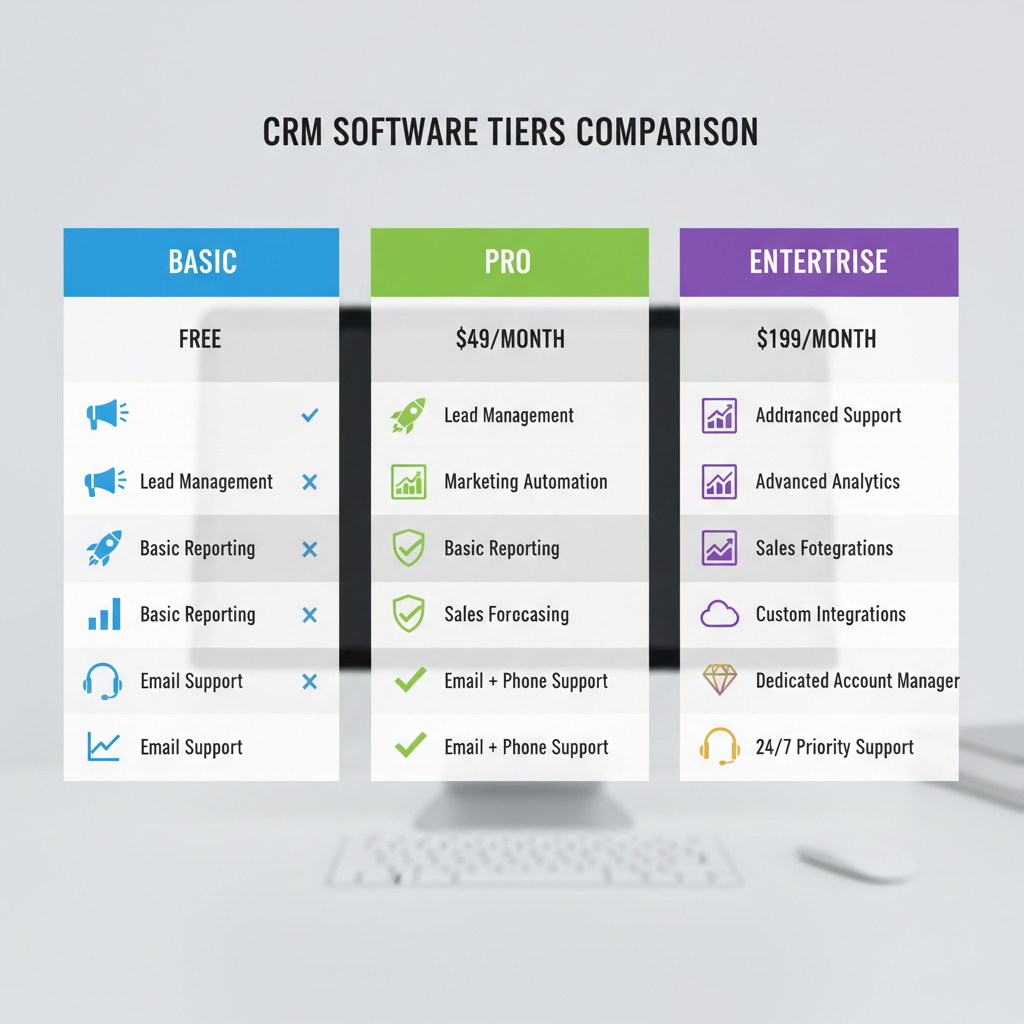
    A vibrant, detailed infographic comparing features of different CRM software tiers (Basic, Pro, Enterprise) with corresponding price indicators. The infographic should be clear, modern, and easy to understand, using icons for different features like 'lead management', 'marketing automation', 'reporting', and 'support level'.

    How to Approach Your CRM Software Pricing Comparison

    Don’t just look at the advertised price! Here’s a smart way to approach your comparison:

    • Identify Your Non-Negotiables: Before looking at prices, list the absolute must-have features your business needs. This helps you eliminate unsuitable options quickly.
    • Calculate Total Cost of Ownership (TCO): Look beyond the monthly subscription. Consider setup fees, training costs, integration costs, and potential future upgrades. A seemingly cheaper CRM might have hidden costs that inflate its TCO.
    • Read the Fine Print: Always check terms and conditions for any hidden fees, data limits, or cancellation policies.
    • Leverage Free Trials: Many CRM providers offer free trials. This is an excellent way to test out the software and see if it fits your team’s workflow before committing financially.

    A business professional happily reviewing a detailed spreadsheet showing a CRM software pricing comparison, with columns for 'Features', 'Users', 'Monthly Cost', 'Annual Cost', 'Setup Fees', and 'Total Cost of Ownership'. The background is a bright, modern office.

    Wrapping It Up

    Performing a thorough CRM software pricing comparison is a crucial step in choosing the right tool for your business. By understanding the factors that influence cost and carefully evaluating your specific needs, you can confidently select a CRM that not only fits your budget today but also supports your growth well into the future. Happy hunting for your perfect CRM solution!

  • What Does CRM Stand For? Unpacking Customer Relationship Management for Your Business

    What Does CRM Stand For? Unpacking Customer Relationship Management for Your Business

    Ever wondered what does CRM stand for when you hear businesses talk about it? You’re not alone! It’s a term thrown around quite a bit, especially in the business world, and understanding it can unlock a world of benefits for your company, no matter its size. Simply put, CRM is about building and nurturing strong relationships with your customers, and using technology to make that process super efficient and effective. Let’s dive in and demystify this powerful concept.

    So, What Exactly Does CRM Stand For?

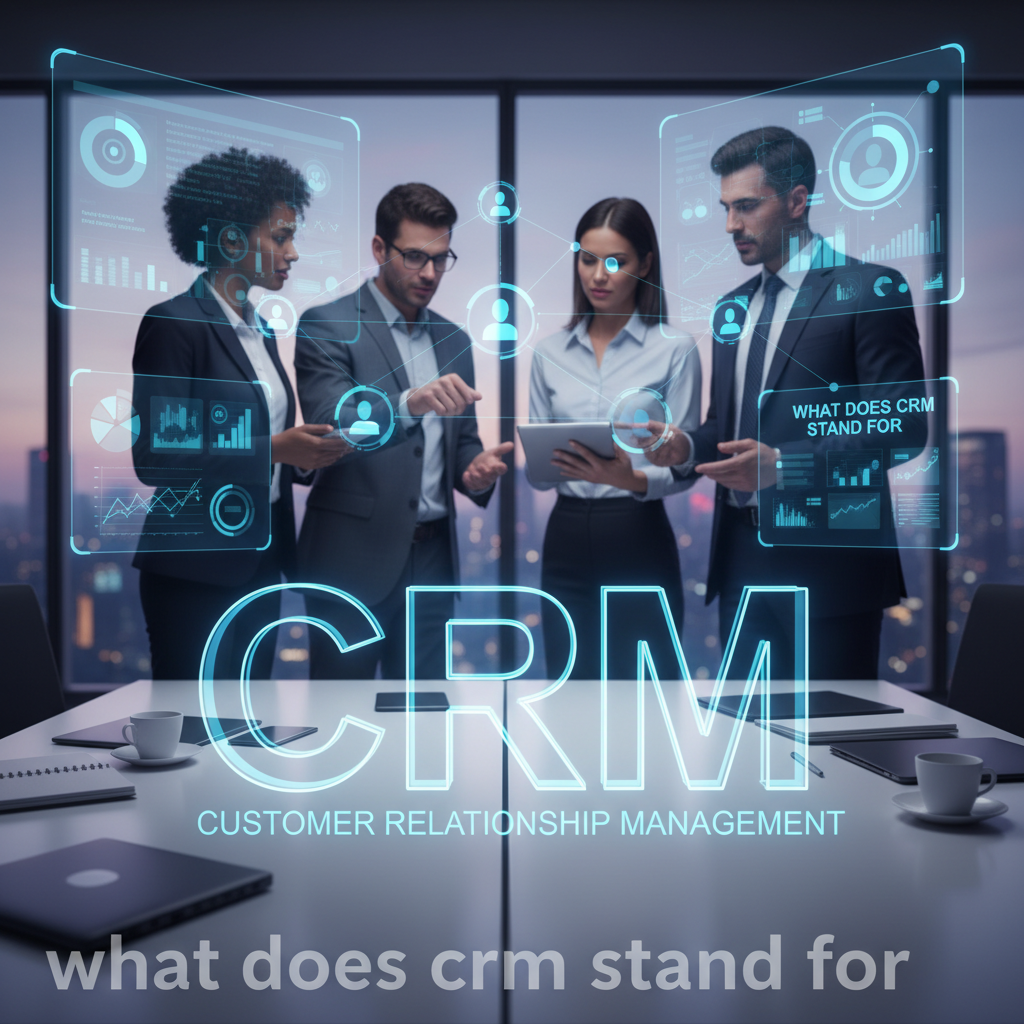
    Alright, let’s get straight to the point. CRM stands for Customer Relationship Management. It’s a strategy, a process, and often, a technology that companies use to manage and analyze customer interactions and data throughout the customer lifecycle. The goal? To improve business relationships with customers, assist in customer retention, and drive sales growth.

    Think of it as your company’s digital brain for all things customer-related. It’s designed to compile information from a range of different communication channels, including a company’s website, telephone, email, live chat, marketing materials, and social media. A good CRM system allows businesses to learn more about their target audiences and how to best cater to their needs. This helps you:

    • Organize Customer Data: Keep all customer information in one centralized place.
    • Track Interactions: Log every call, email, meeting, and purchase.
    • Automate Tasks: Streamline repetitive tasks like sending follow-up emails.
    • Analyze Performance: Understand what’s working and what’s not in your customer engagement.

    Why is CRM So Important for Your Business?

    In today’s competitive landscape, knowing your customers isn’t just a nice-to-have; it’s a must-have. A robust CRM system can transform how you interact with your clientele, leading to happier customers and a healthier bottom line.

    Enhanced Customer Satisfaction

    When you have all the information about a customer at your fingertips – their purchase history, previous interactions, and preferences – you can provide personalized and prompt service. This makes customers feel valued and understood, significantly boosting their satisfaction and loyalty.

    Streamlined Business Processes

    CRM tools automate many routine tasks, freeing up your sales, marketing, and customer service teams to focus on more strategic activities. Imagine sales reps spending less time on data entry and more time building relationships!

    Improved Data Organization

    No more scattered spreadsheets or lost notes! A CRM centralizes all customer data, making it easily accessible to anyone in your organization who needs it. This consistent data source ensures everyone is on the same page.

    Better Sales and Marketing Strategies

    With detailed insights into customer behavior and preferences, your marketing campaigns can be highly targeted, leading to better conversion rates. Sales teams can identify hot leads faster and tailor their pitches for maximum impact.

    A diverse team of smiling business professionals collaborating in a modern office, looking at a shared screen displaying a CRM dashboard with graphs and customer data. The atmosphere is productive and positive. Photorealistic.

    Different Flavors of CRM Systems

    Not all CRM systems are created equal. They often come with different focuses to meet specific business needs. Understanding the main types can help you decide what might be best for your operation:

    • Operational CRM: Focuses on automating customer-facing processes like sales, marketing, and customer service. It streamlines operations that deal directly with customers.
    • Analytical CRM: Concentrates on collecting and analyzing customer data to gain deeper insights into customer behavior. This helps in making better business decisions, segmenting customers, and predicting trends.
    • Collaborative CRM: Aims to improve communication and information sharing between different departments within a company. It ensures that all teams have access to the same customer information, promoting a unified customer experience.

    Who Uses CRM and How?

    CRM isn’t just for big corporations; small and medium-sized businesses (SMBs) are increasingly adopting it too! Anyone who interacts with customers, whether directly or indirectly, can benefit. This includes:

    • Sales Teams: To manage leads, track opportunities, and automate sales tasks.
    • Marketing Teams: To run targeted campaigns, segment audiences, and measure campaign effectiveness.
    • Customer Service Teams: To handle inquiries, resolve issues, and provide support efficiently.
    • Business Owners: To get a 360-degree view of their business performance and customer base.

    From a freelance consultant managing client projects to a global e-commerce giant handling millions of transactions, CRM helps businesses keep their customer relationships strong and their operations smooth.

    A small business owner sitting at a desk, looking intently at a tablet displaying a user-friendly CRM interface with customer profiles and recent interactions. A cup of coffee and a notebook are nearby. Soft, natural lighting. Photorealistic.

    Getting Started with CRM: What to Consider

    If you’re thinking about implementing a CRM, here are a few quick tips:

    1. Define Your Needs: What problems are you trying to solve?
    2. Research Options: There are many CRM platforms out there (Salesforce, HubSpot, Zoho CRM, etc.).
    3. Start Simple: You don’t need all the bells and whistles from day one.
    4. Train Your Team: Proper training is crucial for successful adoption.

    Conclusion

    So, now you know that what does CRM stand for isn’t just a technical acronym, but a fundamental business strategy focused on strengthening customer relationships. By leveraging CRM technology, businesses can gain invaluable insights, streamline operations, and ultimately foster customer loyalty and drive growth. It’s a game-changer for anyone looking to put their customers at the heart of their business strategy. Happy relationship building!