Category: CRM

  • Supercharge Your Business Growth: The Magic of AI-Powered CRM Software

    Supercharge Your Business Growth: The Magic of AI-Powered CRM Software

    In today’s fast-paced business world, understanding your customers isn’t just an advantage—it’s essential for survival. But with mountains of data and countless interactions, how do you keep up? Enter AI-Powered CRM Software, the game-changer that’s transforming how businesses connect with their customers. Gone are the days of manual data entry and guesswork; AI is here to make your customer relationships smarter, more efficient, and ultimately, more profitable. If you’re looking to elevate your sales, marketing, and customer service, embracing an AI-powered CRM is your next big step.

    What Exactly is AI-Powered CRM Software?

    Think of traditional Customer Relationship Management (CRM) software as your digital rolodex and interaction log. It stores customer data, tracks communications, and helps manage sales pipelines. Now, imagine giving that system a brain. That’s essentially what AI-Powered CRM Software does! It integrates artificial intelligence and machine learning capabilities directly into your CRM platform. This means the software doesn’t just store data; it analyzes it, learns from it, and provides actionable insights. From predicting customer behavior to automating repetitive tasks, AI brings a whole new level of intelligence to your customer interactions.

    A futuristic office environment with people collaborating, while digital interfaces display AI-driven insights and customer data on large screens, illustrating the seamless integration of technology and human effort. Photorealistic, vibrant colors.

    Key Benefits of Embracing AI in Your CRM

    Wondering what kind of superpowers AI brings to your CRM? Let’s dive into the exciting advantages:

    Smarter Customer Insights

    AI can process vast amounts of customer data far quicker and more accurately than any human. It identifies patterns, predicts trends, and even analyzes customer sentiment from interactions. This means you get a deeper, more nuanced understanding of each customer, allowing you to tailor your approach like never before.

    Automation Galore

    Tired of manual data entry, lead scoring, and scheduling follow-ups? AI automates these mundane, time-consuming tasks. This frees up your sales, marketing, and service teams to focus on what they do best: building meaningful relationships and closing deals.

    Predictive Power for Proactive Strategies

    AI-powered CRM software can predict which leads are most likely to convert, which customers might churn, and what products or services a customer might be interested in next. This foresight allows your teams to be proactive, engaging with customers at just the right moment with the right message.

    Hyper-Personalized Customer Experiences

    With AI, personalization goes beyond just using a customer’s name. It means delivering tailored product recommendations, customizing marketing messages based on past behavior, and offering relevant support proactively. This level of personalization fosters loyalty and significantly boosts customer satisfaction.

    How AI-Powered CRM Software Transforms Different Departments

    AI isn’t just a niche tool; its benefits ripple across your entire organization:

    Sales Teams Get a Boost

    Sales reps can spend less time on admin and more time selling. AI helps with lead prioritization, predicting the likelihood of a sale, and even suggesting the best next steps in the sales process. This translates into shorter sales cycles and higher conversion rates.

    Marketing Becomes More Targeted

    Marketers can create highly segmented campaigns with pinpoint accuracy. AI helps identify the best channels for reaching specific customer groups, optimizes campaign timing, and personalizes content, leading to much better ROI on marketing efforts.

    Customer Service Reaches New Heights

    Imagine chatbots resolving common queries instantly or AI routing complex issues to the perfect agent. AI-Powered CRM Software enhances customer service by speeding up response times, providing agents with instant access to relevant customer history, and even predicting customer needs before they ask.
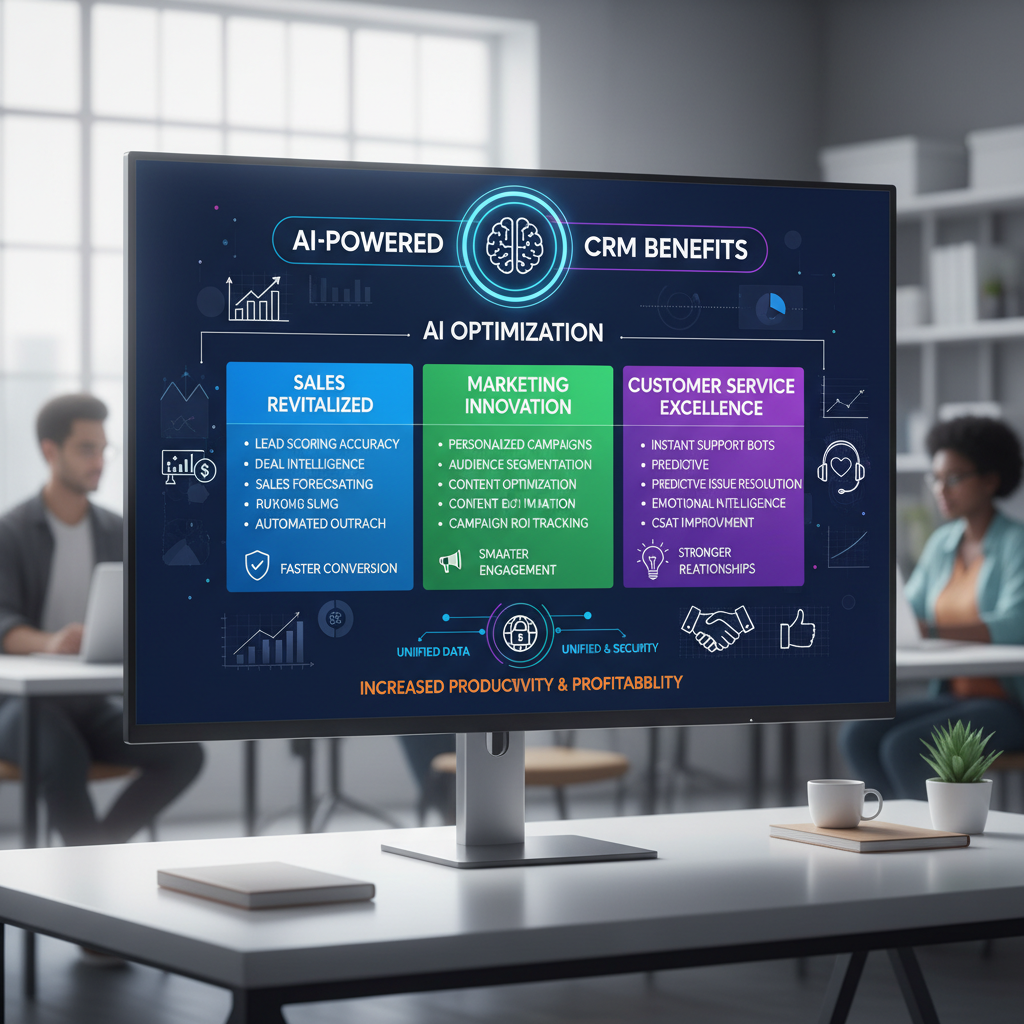
    A vibrant infographic showcasing the various benefits of AI-powered CRM for different departments like sales, marketing, and customer service, using icons and clean data visualizations. The infographic should be modern and engaging. Photorealistic.

    Choosing the Best AI-Powered CRM Software for Your Business

    When selecting an AI-powered CRM, consider your business size, specific needs, and future growth. Look for solutions that offer robust AI capabilities, seamless integration with your existing tools, scalability, and an intuitive user interface. A good AI CRM should grow with you and make your team’s lives easier, not more complicated.

    The Future is Now: Embrace AI-Powered CRM

    Integrating AI-Powered CRM Software isn’t just about adopting a new technology; it’s about future-proofing your business. It empowers you to build stronger, more meaningful customer relationships, drive efficiency across your organization, and make data-driven decisions that propel growth. So, are you ready to unlock the magic and transform your customer strategy? The future of CRM is intelligent, and it’s here now!


  • Supercharge Your Sales: Why CRM Software for Sales Automation is Your Secret Weapon

    Supercharge Your Sales: Why CRM Software for Sales Automation is Your Secret Weapon

    Are you ready to revolutionize your sales process? In today’s fast-paced business world, simply having a good product isn’t enough. Your sales team needs tools that empower them to be more efficient, effective, and customer-focused. That’s exactly where CRM software for sales automation steps in, transforming how businesses manage their customer relationships and streamline their sales efforts.

    What is CRM Software for Sales Automation Anyway?

    At its core, CRM software for sales automation combines customer relationship management (CRM) functionalities with powerful automation tools designed specifically for sales tasks. Think of it as your sales team’s best friend, taking care of the repetitive, manual chores so they can focus on what they do best: building relationships and closing deals. It’s about bringing together all your customer data in one place and then using that data to automate key stages of the sales cycle.

    Key Benefits of Embracing Sales Automation with CRM

    Implementing robust CRM software for sales automation can lead to significant improvements across your entire sales operation. Let’s break down some of the major perks:

    Boost Productivity & Efficiency

    One of the most immediate benefits is the massive boost in productivity. Imagine:

    • Automated Lead Routing: New leads are instantly assigned to the right salesperson based on predefined rules.
    • Automated Task Management: Follow-up reminders, meeting scheduling, and data entry are handled without manual intervention.
    • Streamlined Communications: Automated email sequences, personalized messages, and meeting invites save precious time.

    This means less time spent on administrative tasks and more time spent actually selling.

    Enhance Customer Relationships

    A great CRM software for sales automation helps you truly understand your customers. By centralizing all interactions, purchase history, and preferences, your sales team can:

    • Offer personalized solutions.
    • Anticipate customer needs.
    • Provide timely and relevant follow-ups.

    This leads to stronger relationships, higher customer satisfaction, and increased loyalty.

    Streamline Sales Pipeline Management

    Keeping tabs on every lead and opportunity can be a nightmare without the right tools. CRM software with sales automation features provides a clear, visual representation of your sales pipeline. This allows you to:

    • Track deals through every stage.
    • Identify bottlenecks and areas for improvement.
    • Prioritize high-value opportunities.
    • A vibrant, colorful infographic showing a sales pipeline with stages like

    Gain Valuable Insights & Analytics

    Data is power, and CRM software for sales automation is a data-generating machine. It collects valuable information that can be turned into actionable insights through robust reporting and analytics features. This means better:

    • Sales forecasting.
    • Performance tracking for individual reps and teams.
    • Identification of successful sales strategies.
    • Data-driven decision-making.

    Essential Features to Look For in a CRM for Sales Automation

    When you’re shopping around for the perfect system, here are some must-have features to ensure you get the most out of your investment:

    • Lead Management & Scoring: Automatically capture, qualify, and prioritize leads.
    • Email Automation & Templates: Send personalized emails at scale and track engagement.
    • Task & Calendar Management: Keep sales reps organized with automated tasks and integrated calendars.
    • Sales Forecasting: Predict future sales performance with greater accuracy.
    • Reporting & Analytics: Customizable dashboards and reports to monitor KPIs.
    • Integration Capabilities: Seamlessly connect with other tools like marketing automation, ERP, or communication platforms.
    • Mobile Access: Allow your sales team to manage their pipeline on the go.

    Choosing the Right CRM Software for Sales Automation for Your Business

    Selecting the right CRM software for sales automation depends on your specific business needs. Consider your team’s size, your sales process complexity, and your budget. It’s wise to look for a solution that is user-friendly, scalable, and offers excellent customer support. Don’t be afraid to try demos or free trials to see which system best fits your workflow.

    A professional, diverse sales team smiling and interacting in a modern office setting, with one team member pointing at a laptop screen displaying a user-friendly CRM interface with various sales automation features. The atmosphere is collaborative and productive.

    Ready to Automate Your Way to Sales Success?

    In conclusion, investing in CRM software for sales automation isn’t just a trend; it’s a strategic move for any business looking to enhance efficiency, improve customer relationships, and ultimately drive more sales. By automating repetitive tasks and providing deep insights, CRM software empowers your sales team to reach new heights. So, why wait? Explore your options and start supercharging your sales today!

  • Unlock Loyalty: How CRM Improves Customer Retention for Lasting Business Success

    Unlock Loyalty: How CRM Improves Customer Retention for Lasting Business Success

    In today’s competitive market, customer retention isn’t just a buzzword; it’s the lifeline of sustainable business growth. Losing a customer can be costly, making it crucial for businesses to focus on keeping their existing clientele happy and engaged. So, how CRM improves customer retention is a question many businesses are asking, and the answer lies in its ability to transform how you interact with your customers. A robust Customer Relationship Management (CRM) system is more than just a contact list; it’s a strategic tool designed to build stronger, longer-lasting relationships.

    The Core of Retention: Understanding Your Customers

    At its heart, successful customer retention hinges on truly knowing your customers. CRM systems excel at gathering and organizing vast amounts of customer data, turning it into actionable insights. This deep understanding is precisely how CRM improves customer retention significantly.

    Centralized Data: A Single Source of Truth

    Imagine having all your customer interactions, purchase history, preferences, and support tickets in one place. That’s what a CRM offers. Instead of scattered information across different departments, a CRM centralizes everything. This means sales, marketing, and support teams all have access to the same up-to-date information, leading to a consistent and informed approach.

    A vibrant, detailed, photorealistic illustration showing various data points (customer profiles, purchase history, interaction logs, preferences) flowing into a central, glowing CRM dashboard, with different departmental icons (sales, marketing, support) connected to it, symbolizing a unified view of customer data.

    Personalization at Scale

    Once you have all that data, you can stop treating your customers like numbers. A CRM allows you to segment your audience based on behavior, demographics, and preferences. This segmentation enables highly personalized communication and offers, making each customer feel valued and understood. This tailored approach is a key component of how CRM improves customer retention by fostering a sense of individual connection.

    Proactive Engagement: Keeping Customers Happy

    It’s not enough to react when a customer has a problem; true retention comes from proactive engagement. CRM tools empower businesses to reach out effectively and anticipate customer needs.

    Tailored Communication

    With a CRM, you can automate personalized emails, special offers, and follow-ups based on specific triggers like a recent purchase, a birthday, or a period of inactivity. This ensures your communication is always relevant, timely, and appreciated, rather than feeling like generic spam. This continuous, relevant dialogue is vital for keeping customers engaged.

    A realistic close-up photo of a smartphone screen displaying a personalized marketing email or message with the customer's name and relevant product recommendations, held in a person's hand. In the background, there's a subtly blurred, modern office setting with people working.

    Anticipating Needs

    By analyzing past behavior and preferences, a CRM can help predict future needs or potential issues. For instance, if a customer regularly purchases a specific product, the CRM can flag them for a replenishment reminder or suggest related items. This foresight makes customers feel cared for and can prevent them from looking elsewhere.

    Streamlining Support for Stellar Experiences

    Excellent customer service is non-negotiable for retention. A CRM system helps streamline support operations, turning potential frustrations into opportunities for loyalty.

    Faster Problem Resolution

    When a customer contacts support, the CRM immediately provides the agent with their complete history. No more asking customers to repeat themselves or digging through old notes. This efficiency leads to faster, more effective problem resolution, which significantly impacts satisfaction.

    Consistent Service Across Channels

    Whether a customer reaches out via email, chat, or phone, the CRM ensures a consistent experience. Every interaction is logged, so any agent can pick up where the last one left off, guaranteeing a seamless and frustration-free support journey. This consistency builds trust and reinforces the customer’s decision to stay with your brand.

    Data-Driven Decisions: The Secret Sauce

    One of the most powerful aspects of CRM for retention is its ability to provide actionable data and analytics.

    Identifying At-Risk Customers

    CRMs can identify patterns or behaviors that indicate a customer might be at risk of churning. This could be declining engagement, fewer purchases, or unresolved issues. Armed with this insight, you can proactively intervene with targeted offers or check-ins to re-engage them before it’s too late.

    Measuring Success

    CRM dashboards offer clear metrics on customer satisfaction, churn rates, and the effectiveness of your retention strategies. This allows you to continuously refine your approach, ensuring your efforts are always optimized for the best results. Understanding these metrics is crucial for understanding how CRM improves customer retention over time.

    So, there you have it! From centralizing customer data and enabling hyper-personalization to streamlining support and providing crucial insights, a CRM system is an indispensable tool for any business serious about keeping its customers. By leveraging the power of CRM, you’re not just managing relationships; you’re actively building loyalty and securing a stronger, more sustainable future for your business. That’s ultimately how CRM improves customer retention in a big way!

  • Breaking Down the Numbers: How Much Does CRM Software Cost in 2024?

    Breaking Down the Numbers: How Much Does CRM Software Cost in 2024?

    If you’re wondering, “how much does CRM software cost?”, you’re not alone! It’s one of the most common questions businesses ask when considering a Customer Relationship Management (CRM) system. A good CRM can be a game-changer for managing customer interactions, streamlining sales, and boosting marketing efforts. However, the price tag can vary wildly, making it tough to budget. Let’s dive into what influences CRM costs and help you understand what to expect.

    What Exactly Is a CRM System and Why Do You Need One?

    Before we talk about pricing, let’s quickly recap. A CRM system helps businesses manage and analyze customer interactions and data throughout the customer lifecycle, with the goal of improving business relationships with customers, assisting in customer retention, and driving sales growth. From tracking leads to managing customer service, it’s a central hub for all things customer-related.

    Factors Influencing CRM Software Costs

    So, how much does CRM software cost? The answer isn’t a simple number, as many factors come into play. Understanding these elements will help you estimate your potential investment.

    1. Deployment Type: Cloud vs. On-Premise

    • Cloud-based CRM (SaaS): This is the most popular option. You pay a subscription fee (usually monthly or annually) to use the software hosted by the vendor.

    * Pros: Lower upfront costs, easy setup, automatic updates, accessible from anywhere.
    * Cons: Less control over data, dependent on internet connection, ongoing subscription fees.

    • On-premise CRM: You purchase the software license and host it on your own servers.

    * Pros: Full data control, high customization, one-time license fee.
    * Cons: High upfront costs, requires IT staff for maintenance and updates, less flexibility.

    2. Features and Functionality

    Basic CRM packages often include contact management, lead tracking, and reporting. More advanced features like marketing automation, sales forecasting, project management, AI capabilities, and advanced analytics will naturally increase the cost. Think about what your business truly needs versus what would be ‘nice to have’.

    3. Number of Users

    Most CRM vendors price their software on a per-user, per-month basis. The more team members who need access, the higher your total monthly or annual bill will be. Some vendors offer volume discounts, so always ask!

    4. Customization and Integration

    Does your CRM need to talk to other software you use, like your accounting system or email marketing platform? Integrations can add to the cost, especially if they require custom development. Similarly, tailoring the CRM to fit your unique workflows might incur additional setup or development fees.

    5. Support and Training

    Basic support is usually included, but premium support (24/7, dedicated account manager) often comes with an extra charge. Don’t forget training costs for your team; a powerful CRM is useless if nobody knows how to use it effectively!

    A diverse group of business professionals in a modern office looking at a CRM dashboard on a large screen, discussing data and collaborating. The image should convey teamwork and technology usage.

    Common CRM Pricing Models

    Now that we know what influences the price, let’s look at how vendors typically structure their pricing when you ask, “how much does CRM software cost?”

    Per-User, Per-Month

    This is the most common model. You pay a set fee for each user who accesses the system, usually billed monthly or annually.
    Example*: $25/user/month for a basic plan, $75/user/month for an enterprise plan.

    Tiered Pricing

    Vendors often offer different “tiers” or “editions” (e.g., Starter, Professional, Enterprise). Each tier comes with an increasing set of features and capabilities, and a corresponding higher price point.
    Starter/Basic*: Essential features for small businesses.
    Professional*: More robust sales and marketing tools.
    Enterprise*: Comprehensive features, advanced analytics, highest level of customization and support for large organizations.

    Flat Rate or Enterprise Plans

    Some large-scale or highly customized solutions might come with a flat rate, especially for very large organizations or specific industry solutions. This usually involves a comprehensive package deal.

    Don’t Forget the Hidden Costs!

    When calculating how much CRM software costs, it’s easy to overlook some less obvious expenses:

    • Implementation Fees: Getting the system set up and data migrated.
    • Integration Costs: Connecting with other business tools.
    • Data Migration: Moving your existing customer data into the new CRM.
    • Add-ons and Premium Features: Special modules or advanced reporting.
    • Training: Ensuring your team can actually use the software.
    • Maintenance and Upgrades: Especially for on-premise solutions.

    A person looking thoughtfully at a complex infographic showing various costs associated with CRM software, including subscriptions, implementation, training, and integrations, displayed with a clean, professional design.

    Tips for Choosing the Right CRM (and Budget)

    1. Assess Your Needs: What problems do you need the CRM to solve? What features are essential?
    2. Start Small, Scale Up: Many CRMs allow you to start with a basic plan and add features or users as your business grows.
    3. Read the Fine Print: Understand all costs, including hidden fees, implementation, and support.
    4. Trial Periods: Take advantage of free trials to test features and user-friendliness before committing.
    5. Get Quotes: Don’t settle for the first price you see. Get multiple quotes and compare.

    Conclusion

    So, how much does CRM software cost? As you can see, there’s no single answer. Prices can range from free (for very basic versions) to hundreds or even thousands of dollars per user per month for enterprise-grade solutions. The key is to remember that the total CRM software cost isn’t just the subscription fee; it includes implementation, training, and potential integrations. By carefully evaluating your business needs, understanding the various pricing models, and accounting for potential hidden costs, you can make an informed decision and find a CRM that fits both your requirements and your budget. Happy customer managing!