Category: Marketing

  • Supercharge Your Sales: Mastering Marketing Automation with CRM

    Supercharge Your Sales: Mastering Marketing Automation with CRM

    Hey there! Ever wondered how some businesses seem to effortlessly connect with their customers, nurture leads, and close deals like magic? The secret often lies in a powerful combination: Marketing Automation with CRM. This isn’t just a fancy tech buzzword; it’s a game-changer for businesses looking to streamline their efforts, personalize customer interactions, and ultimately, grow faster. If you’re ready to make your marketing and sales teams work in perfect harmony, you’re in the right place!

    What Exactly is Marketing Automation with CRM?

    Let’s break it down. Marketing Automation refers to software that automates repetitive marketing tasks, like sending emails, posting on social media, and managing ad campaigns. It’s all about making your marketing efforts more efficient and scalable.

    Then we have CRM (Customer Relationship Management). Think of your CRM as your central hub for all customer data – their contact info, purchase history, interactions, and preferences. It’s your single source of truth about every customer and prospect.

    The Power of Integration

    The real magic happens when you bring these two together. By integrating Marketing Automation with CRM, you’re essentially giving your marketing automation system access to a goldmine of customer data. This allows for incredibly precise targeting, personalized messaging, and a much more coherent customer journey from the very first touchpoint all the way through to customer loyalty. It’s like having a superpower for understanding and engaging with your audience!
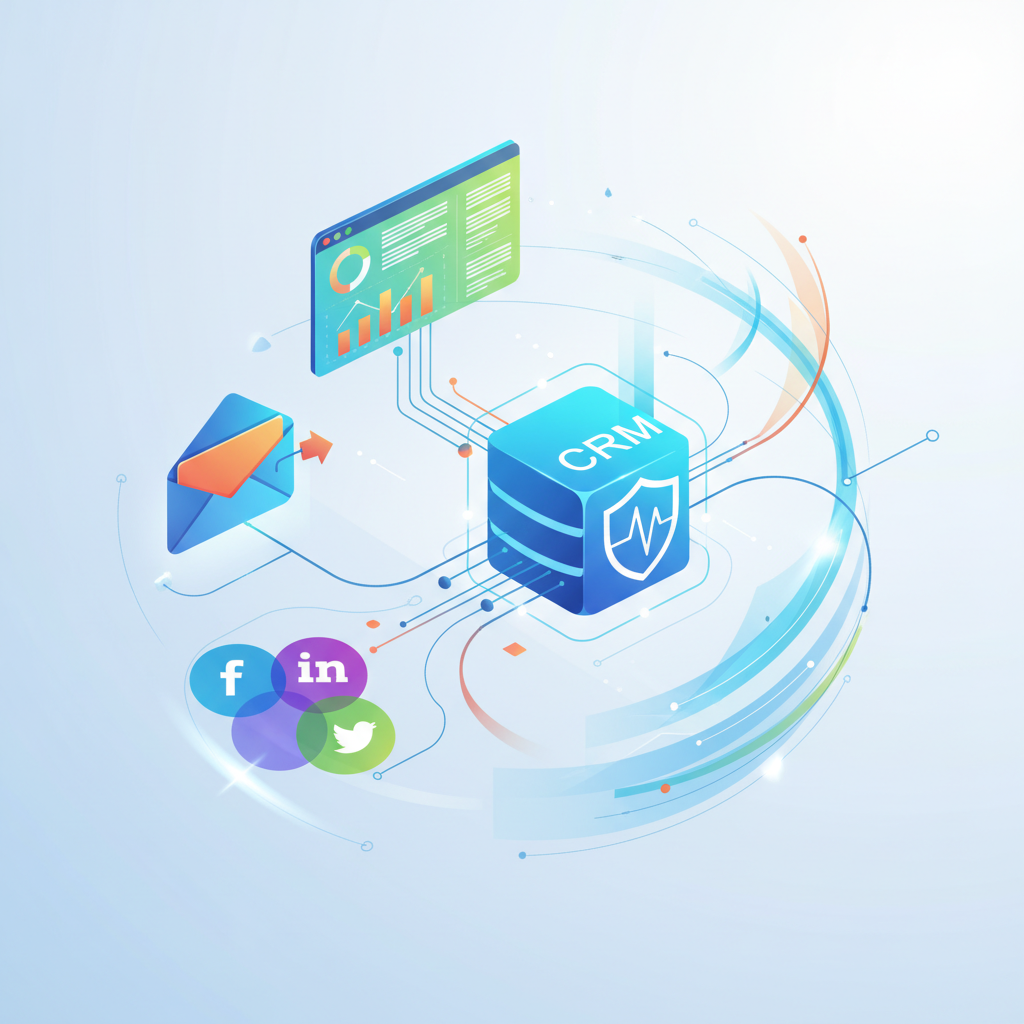
    A vibrant, abstract illustration showing different digital tools (email icon, social media icon, analytics dashboard) seamlessly connecting and flowing into a central CRM database icon, representing the integration of marketing automation with CRM. The background is clean and modern.

    Key Benefits of Implementing Marketing Automation with CRM

    Curious about the real-world advantages? Here are some compelling reasons why businesses are jumping on the Marketing Automation with CRM bandwagon:

    Enhanced Customer Understanding

    With all your customer data in one place, your marketing automation can segment audiences with incredible accuracy. You’ll know exactly who you’re talking to, what they’re interested in, and how they’ve interacted with your brand before. This leads to more relevant and impactful communications.

    Improved Lead Nurturing

    No more leads falling through the cracks! Marketing automation can automatically nurture leads based on their behavior and engagement, sending targeted content at just the right time. When a lead becomes ‘sales-ready,’ the CRM ensures your sales team gets all the context they need to close the deal effectively.

    Increased Efficiency and Productivity

    Automating repetitive tasks frees up your marketing team to focus on strategy and creativity. Imagine the time saved when your follow-up emails, lead scoring, and even social media scheduling are handled automatically. This boost in efficiency trickles down to better overall productivity.

    Better ROI Tracking

    Because all your efforts are connected, it’s much easier to track the effectiveness of your marketing campaigns. You can see which automation workflows are generating the most leads, which content resonates best, and ultimately, calculate your return on investment with greater clarity.

    Practical Applications and Use Cases

    So, what does this look like in action? Let’s explore some common ways businesses leverage Marketing Automation with CRM:

    Automated Email Campaigns

    • Welcome Series: Automatically send a personalized welcome email sequence to new subscribers.
    • Abandoned Cart Recovery: Trigger emails to customers who left items in their shopping cart.
    • Re-engagement Campaigns: Send special offers to inactive customers to bring them back.

    Personalized Customer Journeys

    Based on customer behavior recorded in the CRM, you can create dynamic content and specific journeys. For example, if a customer browses a particular product category, your automation system can send them related product recommendations or case studies.

    Sales & Marketing Alignment

    This is where teams truly unite. Marketing passes hot, qualified leads directly to sales, complete with a full history of their interactions. Sales can then leverage this info for highly personalized outreach, knowing exactly what the lead is interested in and where they are in their buying journey.
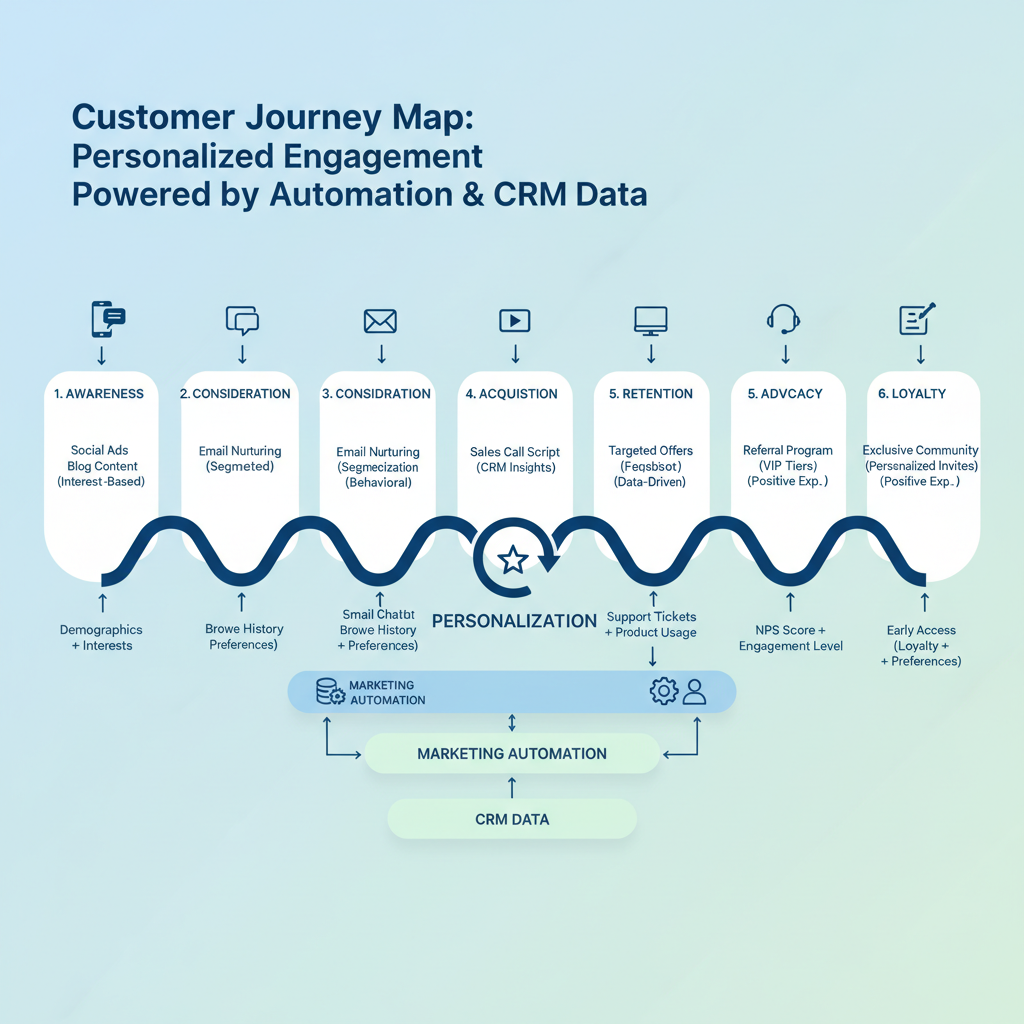
    A detailed infographic illustrating a customer journey map, from awareness to loyalty, with various touchpoints like social media, email, website visits, and sales calls. Each stage shows how marketing automation and CRM data collaborate to guide the customer effectively, with a focus on personalization.

    Getting Started: Tips for Success

    Ready to dive in? Here are a few tips to ensure your Marketing Automation with CRM implementation goes smoothly:

    1. Define Your Goals: What do you want to achieve? More leads? Better customer retention? Clear goals will guide your strategy.
    2. Clean Your Data: A CRM is only as good as its data. Ensure your customer information is accurate and up-to-date.
    3. Start Small: Don’t try to automate everything at once. Pick one or two key workflows to implement first, then expand.
    4. Train Your Teams: Ensure both marketing and sales teams understand how to use the integrated system effectively.
    5. Monitor and Optimize: Regularly review your automation performance and make adjustments based on the data.

    Ready to Transform Your Business?

    Adopting Marketing Automation with CRM isn’t just about adopting new technology; it’s about embracing a smarter, more efficient way of doing business. By automating your marketing efforts and centralizing your customer data, you’re paving the way for stronger customer relationships, increased sales, and sustainable growth. It’s time to let technology do the heavy lifting so you can focus on what truly matters: connecting with your customers and building a thriving business!


  • Boost Customer Satisfaction with CRM: Your Ultimate Guide to Happier Clients

    Boost Customer Satisfaction with CRM: Your Ultimate Guide to Happier Clients

    In today’s competitive market, keeping your customers happy isn’t just a goal; it’s the cornerstone of long-term success. Happy customers become loyal customers, and loyal customers drive growth. So, how do you consistently deliver experiences that delight? The answer often lies in smart technology, specifically by leveraging a Customer Relationship Management (CRM) system. Learning how to boost customer satisfaction with CRM can transform your business, turning casual buyers into passionate advocates.Let’s dive into how CRM can be your secret weapon for creating an exceptional customer journey.## What is CRM and Why Does It Matter for Customer Satisfaction?A CRM system is more than just a contact list; it’s a comprehensive platform designed to manage all your company’s interactions with current and potential customers. From sales and marketing to customer service, CRM centralizes customer data and streamlines processes. For customer satisfaction, this means a consistent, personalized, and efficient experience every single time.### Centralized Customer DataImagine having every piece of information about a customer—their purchase history, preferences, past interactions, and even their birthday—all in one easily accessible place. That’s what a CRM provides. This centralized data eliminates the frustration of customers having to repeat themselves to different departments, making every interaction smoother and more informed.### Streamlined CommunicationCRM helps standardize and streamline communication across all touchpoints. Whether a customer is reaching out via email, phone, social media, or live chat, their history is instantly available. This ensures that every team member can pick up where the last left off, providing a seamless and professional experience. It’s a huge step towards consistency and efficiency.

    A diverse team of customer service agents smiling and working collaboratively at a modern call center, each looking at their computer screens displaying CRM dashboards with customer profiles and communication history. The setting is bright and professional.

    ## Key Ways CRM Helps Boost Customer SatisfactionCRM isn’t just about organizing data; it’s about using that data to proactively enhance customer experiences. Here are some critical ways it helps:### Personalized ExperiencesNo one likes feeling like just another number. CRM allows you to personalize every interaction. With detailed customer profiles, you can address customers by name, recommend products based on past purchases, and send tailored offers that truly resonate with their needs and interests. This level of personalization makes customers feel valued and understood.### Faster Problem ResolutionWhen an issue arises, customers want a quick and effective solution. CRM equips your support team with instant access to customer history, relevant case details, and common solutions. This significantly reduces resolution times, minimizes customer effort, and turns potentially negative experiences into positive ones.### Proactive EngagementCRM helps you anticipate customer needs and engage proactively. By tracking customer behavior and purchase patterns, you can identify potential issues before they escalate or offer timely information that adds value. For instance, sending a reminder for a service renewal or a useful tip related to a recent purchase can go a long way in building trust.### Gathering Valuable FeedbackA good CRM system can also facilitate the collection and analysis of customer feedback. Through surveys, feedback forms, and interaction logging, you can gain insights into what’s working well and what needs improvement. This continuous feedback loop is crucial for refining your services and proving to customers that their opinions matter.

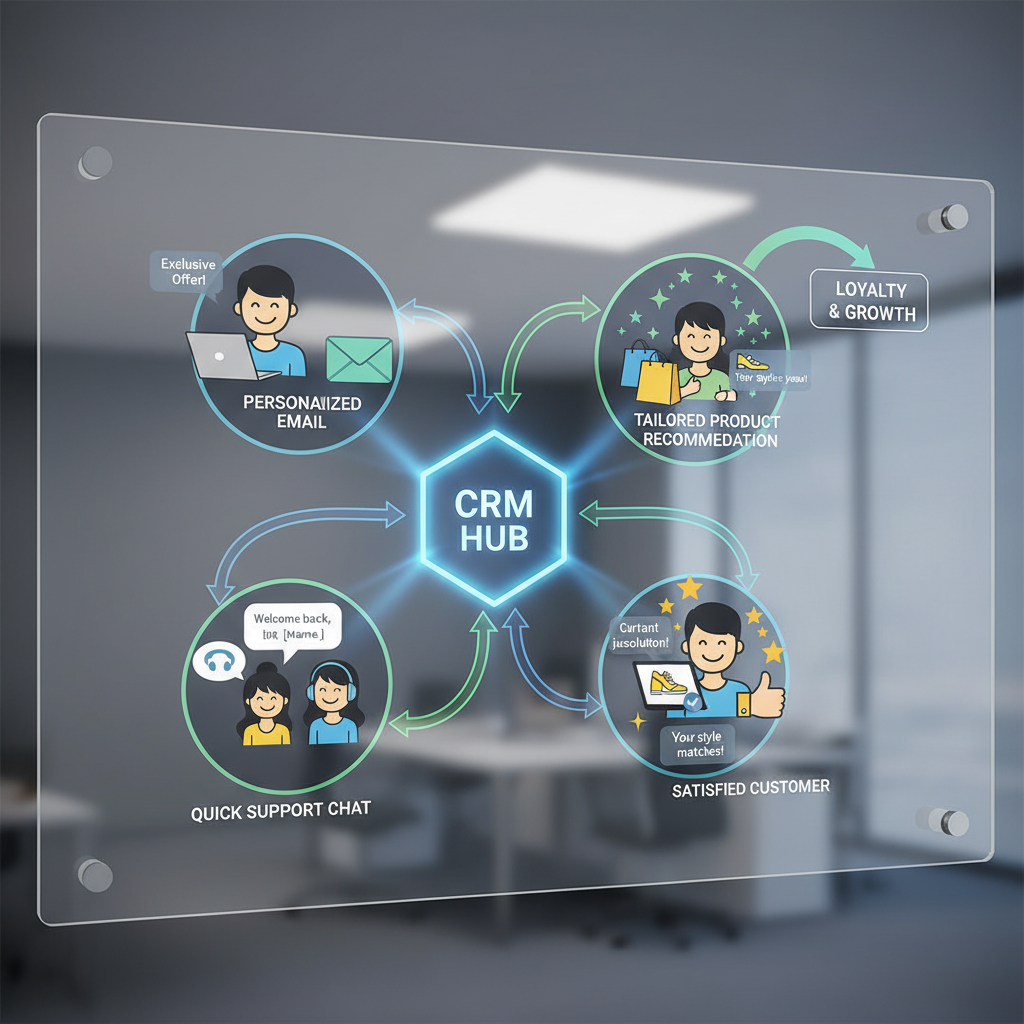
    A vibrant infographic illustrating the journey of a satisfied customer, showing seamless interaction points (e.g., personalized email, quick support chat, tailored product recommendation) powered by a CRM system. Elements like smiling customer icons, data flow lines, and a central CRM hub should be visually prominent and engaging.

    ## Choosing the Right CRM for Your BusinessTo truly boost customer satisfaction with CRM, it’s important to choose a system that fits your business needs. Consider factors like scalability, integration capabilities with other tools (like marketing automation or accounting software), ease of use, and, of course, your budget. A well-chosen CRM becomes an invaluable asset.## ConclusionImplementing a CRM system is a strategic investment in your customer relationships. By centralizing data, streamlining communication, enabling personalization, and facilitating proactive engagement, CRM empowers your business to deliver outstanding experiences. Embrace CRM, and you’ll not only boost customer satisfaction with CRM but also foster loyalty, encourage repeat business, and ultimately drive sustainable growth.

  • Breaking Down the Numbers: How Much Does CRM Software Cost in 2024?

    Breaking Down the Numbers: How Much Does CRM Software Cost in 2024?

    If you’re wondering, “how much does CRM software cost?”, you’re not alone! It’s one of the most common questions businesses ask when considering a Customer Relationship Management (CRM) system. A good CRM can be a game-changer for managing customer interactions, streamlining sales, and boosting marketing efforts. However, the price tag can vary wildly, making it tough to budget. Let’s dive into what influences CRM costs and help you understand what to expect.

    What Exactly Is a CRM System and Why Do You Need One?

    Before we talk about pricing, let’s quickly recap. A CRM system helps businesses manage and analyze customer interactions and data throughout the customer lifecycle, with the goal of improving business relationships with customers, assisting in customer retention, and driving sales growth. From tracking leads to managing customer service, it’s a central hub for all things customer-related.

    Factors Influencing CRM Software Costs

    So, how much does CRM software cost? The answer isn’t a simple number, as many factors come into play. Understanding these elements will help you estimate your potential investment.

    1. Deployment Type: Cloud vs. On-Premise

    • Cloud-based CRM (SaaS): This is the most popular option. You pay a subscription fee (usually monthly or annually) to use the software hosted by the vendor.

    * Pros: Lower upfront costs, easy setup, automatic updates, accessible from anywhere.
    * Cons: Less control over data, dependent on internet connection, ongoing subscription fees.

    • On-premise CRM: You purchase the software license and host it on your own servers.

    * Pros: Full data control, high customization, one-time license fee.
    * Cons: High upfront costs, requires IT staff for maintenance and updates, less flexibility.

    2. Features and Functionality

    Basic CRM packages often include contact management, lead tracking, and reporting. More advanced features like marketing automation, sales forecasting, project management, AI capabilities, and advanced analytics will naturally increase the cost. Think about what your business truly needs versus what would be ‘nice to have’.

    3. Number of Users

    Most CRM vendors price their software on a per-user, per-month basis. The more team members who need access, the higher your total monthly or annual bill will be. Some vendors offer volume discounts, so always ask!

    4. Customization and Integration

    Does your CRM need to talk to other software you use, like your accounting system or email marketing platform? Integrations can add to the cost, especially if they require custom development. Similarly, tailoring the CRM to fit your unique workflows might incur additional setup or development fees.

    5. Support and Training

    Basic support is usually included, but premium support (24/7, dedicated account manager) often comes with an extra charge. Don’t forget training costs for your team; a powerful CRM is useless if nobody knows how to use it effectively!

    A diverse group of business professionals in a modern office looking at a CRM dashboard on a large screen, discussing data and collaborating. The image should convey teamwork and technology usage.

    Common CRM Pricing Models

    Now that we know what influences the price, let’s look at how vendors typically structure their pricing when you ask, “how much does CRM software cost?”

    Per-User, Per-Month

    This is the most common model. You pay a set fee for each user who accesses the system, usually billed monthly or annually.
    Example*: $25/user/month for a basic plan, $75/user/month for an enterprise plan.

    Tiered Pricing

    Vendors often offer different “tiers” or “editions” (e.g., Starter, Professional, Enterprise). Each tier comes with an increasing set of features and capabilities, and a corresponding higher price point.
    Starter/Basic*: Essential features for small businesses.
    Professional*: More robust sales and marketing tools.
    Enterprise*: Comprehensive features, advanced analytics, highest level of customization and support for large organizations.

    Flat Rate or Enterprise Plans

    Some large-scale or highly customized solutions might come with a flat rate, especially for very large organizations or specific industry solutions. This usually involves a comprehensive package deal.

    Don’t Forget the Hidden Costs!

    When calculating how much CRM software costs, it’s easy to overlook some less obvious expenses:

    • Implementation Fees: Getting the system set up and data migrated.
    • Integration Costs: Connecting with other business tools.
    • Data Migration: Moving your existing customer data into the new CRM.
    • Add-ons and Premium Features: Special modules or advanced reporting.
    • Training: Ensuring your team can actually use the software.
    • Maintenance and Upgrades: Especially for on-premise solutions.

    A person looking thoughtfully at a complex infographic showing various costs associated with CRM software, including subscriptions, implementation, training, and integrations, displayed with a clean, professional design.

    Tips for Choosing the Right CRM (and Budget)

    1. Assess Your Needs: What problems do you need the CRM to solve? What features are essential?
    2. Start Small, Scale Up: Many CRMs allow you to start with a basic plan and add features or users as your business grows.
    3. Read the Fine Print: Understand all costs, including hidden fees, implementation, and support.
    4. Trial Periods: Take advantage of free trials to test features and user-friendliness before committing.
    5. Get Quotes: Don’t settle for the first price you see. Get multiple quotes and compare.

    Conclusion

    So, how much does CRM software cost? As you can see, there’s no single answer. Prices can range from free (for very basic versions) to hundreds or even thousands of dollars per user per month for enterprise-grade solutions. The key is to remember that the total CRM software cost isn’t just the subscription fee; it includes implementation, training, and potential integrations. By carefully evaluating your business needs, understanding the various pricing models, and accounting for potential hidden costs, you can make an informed decision and find a CRM that fits both your requirements and your budget. Happy customer managing!