Tag: CRM Software

  • Supercharge Your Business Growth: The Magic of AI-Powered CRM Software

    Supercharge Your Business Growth: The Magic of AI-Powered CRM Software

    In today’s fast-paced business world, understanding your customers isn’t just an advantage—it’s essential for survival. But with mountains of data and countless interactions, how do you keep up? Enter AI-Powered CRM Software, the game-changer that’s transforming how businesses connect with their customers. Gone are the days of manual data entry and guesswork; AI is here to make your customer relationships smarter, more efficient, and ultimately, more profitable. If you’re looking to elevate your sales, marketing, and customer service, embracing an AI-powered CRM is your next big step.

    What Exactly is AI-Powered CRM Software?

    Think of traditional Customer Relationship Management (CRM) software as your digital rolodex and interaction log. It stores customer data, tracks communications, and helps manage sales pipelines. Now, imagine giving that system a brain. That’s essentially what AI-Powered CRM Software does! It integrates artificial intelligence and machine learning capabilities directly into your CRM platform. This means the software doesn’t just store data; it analyzes it, learns from it, and provides actionable insights. From predicting customer behavior to automating repetitive tasks, AI brings a whole new level of intelligence to your customer interactions.

    A futuristic office environment with people collaborating, while digital interfaces display AI-driven insights and customer data on large screens, illustrating the seamless integration of technology and human effort. Photorealistic, vibrant colors.

    Key Benefits of Embracing AI in Your CRM

    Wondering what kind of superpowers AI brings to your CRM? Let’s dive into the exciting advantages:

    Smarter Customer Insights

    AI can process vast amounts of customer data far quicker and more accurately than any human. It identifies patterns, predicts trends, and even analyzes customer sentiment from interactions. This means you get a deeper, more nuanced understanding of each customer, allowing you to tailor your approach like never before.

    Automation Galore

    Tired of manual data entry, lead scoring, and scheduling follow-ups? AI automates these mundane, time-consuming tasks. This frees up your sales, marketing, and service teams to focus on what they do best: building meaningful relationships and closing deals.

    Predictive Power for Proactive Strategies

    AI-powered CRM software can predict which leads are most likely to convert, which customers might churn, and what products or services a customer might be interested in next. This foresight allows your teams to be proactive, engaging with customers at just the right moment with the right message.

    Hyper-Personalized Customer Experiences

    With AI, personalization goes beyond just using a customer’s name. It means delivering tailored product recommendations, customizing marketing messages based on past behavior, and offering relevant support proactively. This level of personalization fosters loyalty and significantly boosts customer satisfaction.

    How AI-Powered CRM Software Transforms Different Departments

    AI isn’t just a niche tool; its benefits ripple across your entire organization:

    Sales Teams Get a Boost

    Sales reps can spend less time on admin and more time selling. AI helps with lead prioritization, predicting the likelihood of a sale, and even suggesting the best next steps in the sales process. This translates into shorter sales cycles and higher conversion rates.

    Marketing Becomes More Targeted

    Marketers can create highly segmented campaigns with pinpoint accuracy. AI helps identify the best channels for reaching specific customer groups, optimizes campaign timing, and personalizes content, leading to much better ROI on marketing efforts.

    Customer Service Reaches New Heights

    Imagine chatbots resolving common queries instantly or AI routing complex issues to the perfect agent. AI-Powered CRM Software enhances customer service by speeding up response times, providing agents with instant access to relevant customer history, and even predicting customer needs before they ask.
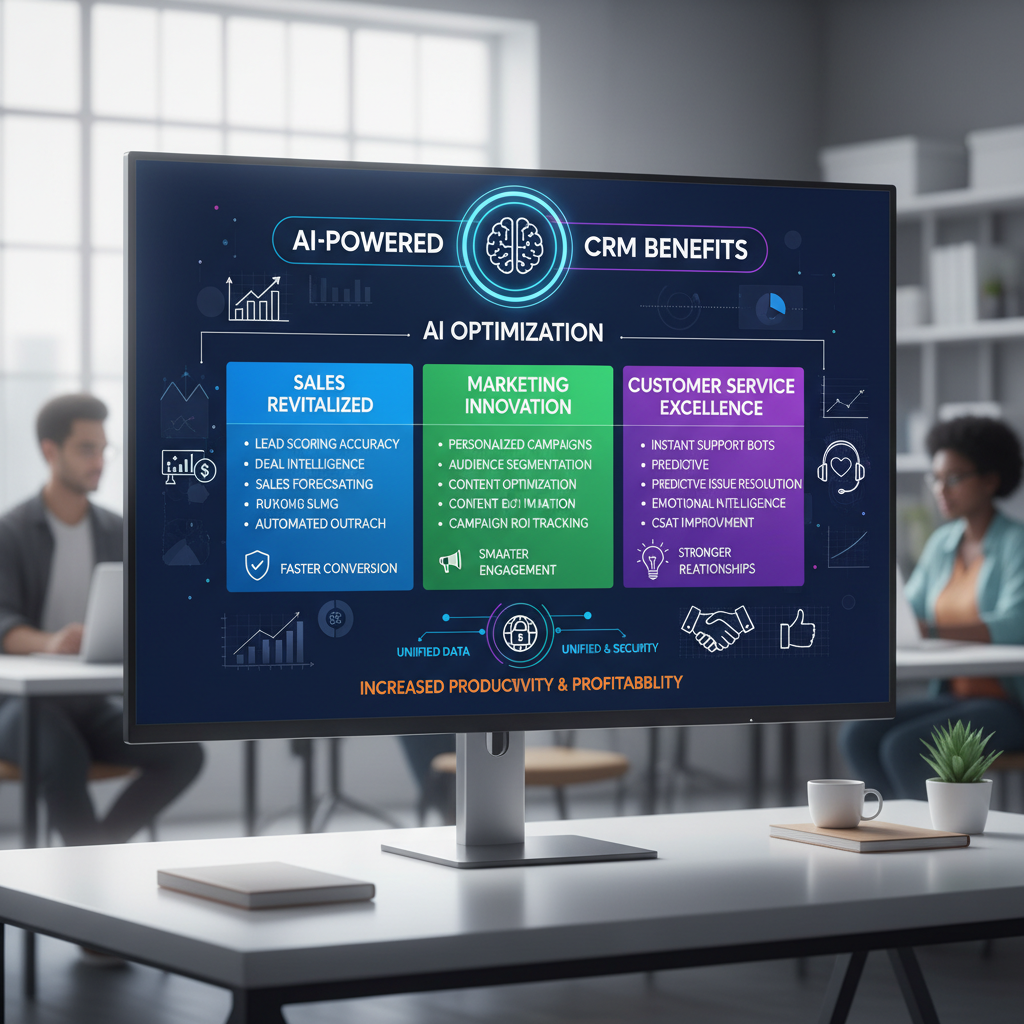
    A vibrant infographic showcasing the various benefits of AI-powered CRM for different departments like sales, marketing, and customer service, using icons and clean data visualizations. The infographic should be modern and engaging. Photorealistic.

    Choosing the Best AI-Powered CRM Software for Your Business

    When selecting an AI-powered CRM, consider your business size, specific needs, and future growth. Look for solutions that offer robust AI capabilities, seamless integration with your existing tools, scalability, and an intuitive user interface. A good AI CRM should grow with you and make your team’s lives easier, not more complicated.

    The Future is Now: Embrace AI-Powered CRM

    Integrating AI-Powered CRM Software isn’t just about adopting a new technology; it’s about future-proofing your business. It empowers you to build stronger, more meaningful customer relationships, drive efficiency across your organization, and make data-driven decisions that propel growth. So, are you ready to unlock the magic and transform your customer strategy? The future of CRM is intelligent, and it’s here now!

  • Demystifying CRM Software Pricing Comparison: Finding the Best Deal for Your Business

    Demystifying CRM Software Pricing Comparison: Finding the Best Deal for Your Business

    So, you’re on the hunt for a Customer Relationship Management (CRM) system, and let’s be honest, trying to make sense of all the different options and their price tags can feel like solving a really complex puzzle. That’s where a solid CRM software pricing comparison comes into play. It’s not just about finding the cheapest option; it’s about finding the best value that aligns perfectly with your business needs without breaking the bank. Let’s dive into how to navigate this often-confusing landscape.

    Why CRM Software Pricing Comparison Matters

    Ignoring the specifics of CRM pricing can lead to overspending on features you don’t need or, worse, underspending and ending up with a system that can’t grow with you. A thorough CRM software pricing comparison helps you identify solutions that offer the right balance of functionality and affordability. Think of it as investing in a tool that will empower your sales, marketing, and customer service teams, ultimately driving revenue and improving customer satisfaction.

    Key Factors Influencing CRM Pricing

    When you’re doing your CRM software pricing comparison, you’ll quickly notice that prices aren’t one-size-fits-all. Several factors contribute to the final cost:

    Number of Users

    Most CRM vendors use a per-user, per-month pricing model. This means the more team members who need access to the CRM, the higher your monthly or annual bill will be. It’s crucial to accurately assess how many users will truly benefit from the system to avoid unnecessary costs.

    Feature Sets and Editions

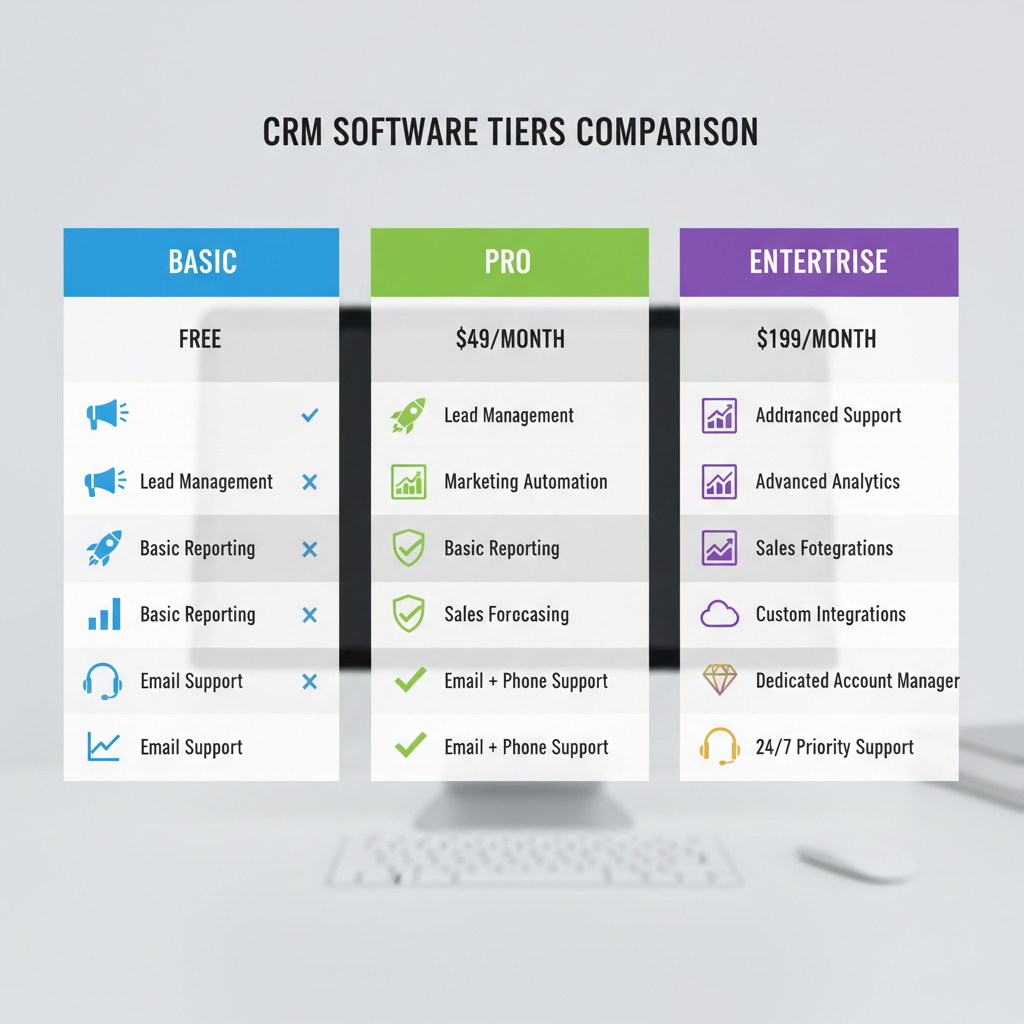
    CRM platforms often come in various editions, like ‘Standard,’ ‘Professional,’ ‘Enterprise,’ or ‘Ultimate.’ Each tier unlocks more advanced features, integrations, and customization options. While a basic package might cover lead management and contact tracking, higher tiers could include advanced analytics, marketing automation, AI capabilities, or robust reporting. Always compare the features offered in each tier during your CRM software pricing comparison.

    Customization & Integrations

    Does your business have unique workflows or require deep integration with other tools you already use (like accounting software or email marketing platforms)? Some CRMs charge extra for advanced customization capabilities or for connecting to third-party applications. Ensure you factor these potential add-ons into your budget.

    Support and Training

    While basic support might be included, premium support (think 24/7 phone access, dedicated account managers, or faster response times) often comes at an additional cost. If your team needs extensive training or quick, expert assistance, investigate the pricing for enhanced support packages.

    Contract Length

    Opting for an annual contract often provides a discount compared to monthly billing. If you’re confident in your CRM choice, committing for a longer term can save you money. However, if you’re still testing the waters, a monthly plan offers more flexibility.

    A vibrant, detailed infographic comparing features of different CRM software tiers (Basic, Pro, Enterprise) with corresponding price indicators. The infographic should be clear, modern, and easy to understand, using icons for different features like 'lead management', 'marketing automation', 'reporting', and 'support level'.

    How to Approach Your CRM Software Pricing Comparison

    Don’t just look at the advertised price! Here’s a smart way to approach your comparison:

    • Identify Your Non-Negotiables: Before looking at prices, list the absolute must-have features your business needs. This helps you eliminate unsuitable options quickly.
    • Calculate Total Cost of Ownership (TCO): Look beyond the monthly subscription. Consider setup fees, training costs, integration costs, and potential future upgrades. A seemingly cheaper CRM might have hidden costs that inflate its TCO.
    • Read the Fine Print: Always check terms and conditions for any hidden fees, data limits, or cancellation policies.
    • Leverage Free Trials: Many CRM providers offer free trials. This is an excellent way to test out the software and see if it fits your team’s workflow before committing financially.

    A business professional happily reviewing a detailed spreadsheet showing a CRM software pricing comparison, with columns for 'Features', 'Users', 'Monthly Cost', 'Annual Cost', 'Setup Fees', and 'Total Cost of Ownership'. The background is a bright, modern office.

    Wrapping It Up

    Performing a thorough CRM software pricing comparison is a crucial step in choosing the right tool for your business. By understanding the factors that influence cost and carefully evaluating your specific needs, you can confidently select a CRM that not only fits your budget today but also supports your growth well into the future. Happy hunting for your perfect CRM solution!

  • Supercharge Your Sales: Why CRM Software for Sales Automation is Your Secret Weapon

    Supercharge Your Sales: Why CRM Software for Sales Automation is Your Secret Weapon

    Are you ready to revolutionize your sales process? In today’s fast-paced business world, simply having a good product isn’t enough. Your sales team needs tools that empower them to be more efficient, effective, and customer-focused. That’s exactly where CRM software for sales automation steps in, transforming how businesses manage their customer relationships and streamline their sales efforts.

    What is CRM Software for Sales Automation Anyway?

    At its core, CRM software for sales automation combines customer relationship management (CRM) functionalities with powerful automation tools designed specifically for sales tasks. Think of it as your sales team’s best friend, taking care of the repetitive, manual chores so they can focus on what they do best: building relationships and closing deals. It’s about bringing together all your customer data in one place and then using that data to automate key stages of the sales cycle.

    Key Benefits of Embracing Sales Automation with CRM

    Implementing robust CRM software for sales automation can lead to significant improvements across your entire sales operation. Let’s break down some of the major perks:

    Boost Productivity & Efficiency

    One of the most immediate benefits is the massive boost in productivity. Imagine:

    • Automated Lead Routing: New leads are instantly assigned to the right salesperson based on predefined rules.
    • Automated Task Management: Follow-up reminders, meeting scheduling, and data entry are handled without manual intervention.
    • Streamlined Communications: Automated email sequences, personalized messages, and meeting invites save precious time.

    This means less time spent on administrative tasks and more time spent actually selling.

    Enhance Customer Relationships

    A great CRM software for sales automation helps you truly understand your customers. By centralizing all interactions, purchase history, and preferences, your sales team can:

    • Offer personalized solutions.
    • Anticipate customer needs.
    • Provide timely and relevant follow-ups.

    This leads to stronger relationships, higher customer satisfaction, and increased loyalty.

    Streamline Sales Pipeline Management

    Keeping tabs on every lead and opportunity can be a nightmare without the right tools. CRM software with sales automation features provides a clear, visual representation of your sales pipeline. This allows you to:

    • Track deals through every stage.
    • Identify bottlenecks and areas for improvement.
    • Prioritize high-value opportunities.
    • A vibrant, colorful infographic showing a sales pipeline with stages like

    Gain Valuable Insights & Analytics

    Data is power, and CRM software for sales automation is a data-generating machine. It collects valuable information that can be turned into actionable insights through robust reporting and analytics features. This means better:

    • Sales forecasting.
    • Performance tracking for individual reps and teams.
    • Identification of successful sales strategies.
    • Data-driven decision-making.

    Essential Features to Look For in a CRM for Sales Automation

    When you’re shopping around for the perfect system, here are some must-have features to ensure you get the most out of your investment:

    • Lead Management & Scoring: Automatically capture, qualify, and prioritize leads.
    • Email Automation & Templates: Send personalized emails at scale and track engagement.
    • Task & Calendar Management: Keep sales reps organized with automated tasks and integrated calendars.
    • Sales Forecasting: Predict future sales performance with greater accuracy.
    • Reporting & Analytics: Customizable dashboards and reports to monitor KPIs.
    • Integration Capabilities: Seamlessly connect with other tools like marketing automation, ERP, or communication platforms.
    • Mobile Access: Allow your sales team to manage their pipeline on the go.

    Choosing the Right CRM Software for Sales Automation for Your Business

    Selecting the right CRM software for sales automation depends on your specific business needs. Consider your team’s size, your sales process complexity, and your budget. It’s wise to look for a solution that is user-friendly, scalable, and offers excellent customer support. Don’t be afraid to try demos or free trials to see which system best fits your workflow.

    A professional, diverse sales team smiling and interacting in a modern office setting, with one team member pointing at a laptop screen displaying a user-friendly CRM interface with various sales automation features. The atmosphere is collaborative and productive.

    Ready to Automate Your Way to Sales Success?

    In conclusion, investing in CRM software for sales automation isn’t just a trend; it’s a strategic move for any business looking to enhance efficiency, improve customer relationships, and ultimately drive more sales. By automating repetitive tasks and providing deep insights, CRM software empowers your sales team to reach new heights. So, why wait? Explore your options and start supercharging your sales today!

  • Unlocking Excellence: Discovering the Top-Rated CRM for Customer Support

    Unlocking Excellence: Discovering the Top-Rated CRM for Customer Support

    Hey there! Ever wondered how some businesses just seem to nail their customer service every single time? Chances are, they’re rocking a Top-rated CRM for Customer support. In today’s fast-paced world, customer satisfaction isn’t just a bonus; it’s the backbone of business success. And that’s where a fantastic CRM comes into play, transforming how you interact with your customers and streamlining your support operations.

    Why a Top-Rated CRM is Your Customer Support Superpower

    Imagine a world where all customer interactions, queries, and history are at your fingertips, organized and accessible. That’s the magic of a powerful CRM system designed specifically for customer support. It’s not just about logging calls; it’s about building lasting relationships and providing lightning-fast, personalized service that keeps customers coming back.

    A vibrant, detailed image of a customer support team member smiling while helping a customer on a computer, with a modern CRM interface displayed on the screen. The office environment is bright and collaborative. Photorealistic, high resolution.

    What Makes a CRM Stand Out for Customer Support?

    So, what separates a good CRM from a Top-rated CRM for Customer support? It boils down to a blend of robust features, intuitive design, and the ability to truly empower your support team. We’re talking about tools that don’t just solve problems but predict them, making every customer interaction a breeze.

    Key Features of a Top-Rated CRM for Customer Support

    When you’re on the hunt for the best, keep an eye out for these crucial functionalities. These are the ingredients that make a CRM truly top-tier:

    • Unified Customer View: A 360-degree look at every customer, including past interactions, purchase history, and preferences.
    • Multi-Channel Support: Seamlessly manage support across email, chat, phone, social media, and more.
    • Automation Capabilities: Automate repetitive tasks like ticket routing, follow-ups, and data entry, freeing up your team.
    • Knowledge Base Management: Empower customers to find answers themselves with an easily searchable, self-service portal.
    • Analytics and Reporting: Gain insights into team performance, customer satisfaction, and areas for improvement.
    • Integration Prowess: Connects effortlessly with other tools you use, such as email marketing, project management, and e-commerce platforms.
    • Customization: The ability to tailor the CRM to fit your unique business processes and customer journey.

    Benefits You’ll Enjoy with a Top-Tier CRM

    Implementing a Top-rated CRM for Customer support isn’t just about fancy software; it’s about tangible improvements to your business’s health and customer happiness. Here’s what you can expect:

    1. Enhanced Customer Satisfaction: Quicker resolutions and personalized service lead to happier customers.
    2. Increased Agent Productivity: Automation and easy access to information mean agents can handle more queries efficiently.
    3. Improved Team Collaboration: Everyone on the team has access to the same up-to-date customer data, fostering better teamwork.
    4. Better Decision Making: Data-driven insights help you understand customer needs and optimize your support strategy.
    5. Reduced Operational Costs: Efficiency gains often translate into cost savings over time.

    A detailed, photorealistic image showing various data visualizations and charts on a CRM dashboard, illustrating customer support metrics like response time, customer satisfaction scores, and ticket resolution rates. The data is clear and actionable.

    Choosing the Right Top-Rated CRM for Your Business

    With so many options out there, how do you pick the perfect one? Start by assessing your business’s specific needs, budget, and future growth plans. Consider a free trial to get a hands-on feel for the system. Remember, the Top-rated CRM for Customer support for one business might not be the best for another. It’s all about finding the right fit for your unique customer service goals.

    Wrapping It Up

    Investing in a Top-rated CRM for Customer support is one of the smartest moves you can make for your business. It’s more than just a tool; it’s a strategic partner that helps you build stronger customer relationships, boost efficiency, and ultimately, drive growth. So go ahead, explore your options, and get ready to elevate your customer support game to legendary status!

  • What Does CRM Stand For? Unpacking Customer Relationship Management for Your Business

    What Does CRM Stand For? Unpacking Customer Relationship Management for Your Business

    Ever wondered what does CRM stand for when you hear businesses talk about it? You’re not alone! It’s a term thrown around quite a bit, especially in the business world, and understanding it can unlock a world of benefits for your company, no matter its size. Simply put, CRM is about building and nurturing strong relationships with your customers, and using technology to make that process super efficient and effective. Let’s dive in and demystify this powerful concept.

    So, What Exactly Does CRM Stand For?

    Alright, let’s get straight to the point. CRM stands for Customer Relationship Management. It’s a strategy, a process, and often, a technology that companies use to manage and analyze customer interactions and data throughout the customer lifecycle. The goal? To improve business relationships with customers, assist in customer retention, and drive sales growth.

    Think of it as your company’s digital brain for all things customer-related. It’s designed to compile information from a range of different communication channels, including a company’s website, telephone, email, live chat, marketing materials, and social media. A good CRM system allows businesses to learn more about their target audiences and how to best cater to their needs. This helps you:

    • Organize Customer Data: Keep all customer information in one centralized place.
    • Track Interactions: Log every call, email, meeting, and purchase.
    • Automate Tasks: Streamline repetitive tasks like sending follow-up emails.
    • Analyze Performance: Understand what’s working and what’s not in your customer engagement.

    Why is CRM So Important for Your Business?

    In today’s competitive landscape, knowing your customers isn’t just a nice-to-have; it’s a must-have. A robust CRM system can transform how you interact with your clientele, leading to happier customers and a healthier bottom line.

    Enhanced Customer Satisfaction

    When you have all the information about a customer at your fingertips – their purchase history, previous interactions, and preferences – you can provide personalized and prompt service. This makes customers feel valued and understood, significantly boosting their satisfaction and loyalty.

    Streamlined Business Processes

    CRM tools automate many routine tasks, freeing up your sales, marketing, and customer service teams to focus on more strategic activities. Imagine sales reps spending less time on data entry and more time building relationships!

    Improved Data Organization

    No more scattered spreadsheets or lost notes! A CRM centralizes all customer data, making it easily accessible to anyone in your organization who needs it. This consistent data source ensures everyone is on the same page.

    Better Sales and Marketing Strategies

    With detailed insights into customer behavior and preferences, your marketing campaigns can be highly targeted, leading to better conversion rates. Sales teams can identify hot leads faster and tailor their pitches for maximum impact.

    A diverse team of smiling business professionals collaborating in a modern office, looking at a shared screen displaying a CRM dashboard with graphs and customer data. The atmosphere is productive and positive. Photorealistic.

    Different Flavors of CRM Systems

    Not all CRM systems are created equal. They often come with different focuses to meet specific business needs. Understanding the main types can help you decide what might be best for your operation:

    • Operational CRM: Focuses on automating customer-facing processes like sales, marketing, and customer service. It streamlines operations that deal directly with customers.
    • Analytical CRM: Concentrates on collecting and analyzing customer data to gain deeper insights into customer behavior. This helps in making better business decisions, segmenting customers, and predicting trends.
    • Collaborative CRM: Aims to improve communication and information sharing between different departments within a company. It ensures that all teams have access to the same customer information, promoting a unified customer experience.

    Who Uses CRM and How?

    CRM isn’t just for big corporations; small and medium-sized businesses (SMBs) are increasingly adopting it too! Anyone who interacts with customers, whether directly or indirectly, can benefit. This includes:

    • Sales Teams: To manage leads, track opportunities, and automate sales tasks.
    • Marketing Teams: To run targeted campaigns, segment audiences, and measure campaign effectiveness.
    • Customer Service Teams: To handle inquiries, resolve issues, and provide support efficiently.
    • Business Owners: To get a 360-degree view of their business performance and customer base.

    From a freelance consultant managing client projects to a global e-commerce giant handling millions of transactions, CRM helps businesses keep their customer relationships strong and their operations smooth.

    A small business owner sitting at a desk, looking intently at a tablet displaying a user-friendly CRM interface with customer profiles and recent interactions. A cup of coffee and a notebook are nearby. Soft, natural lighting. Photorealistic.

    Getting Started with CRM: What to Consider

    If you’re thinking about implementing a CRM, here are a few quick tips:

    1. Define Your Needs: What problems are you trying to solve?
    2. Research Options: There are many CRM platforms out there (Salesforce, HubSpot, Zoho CRM, etc.).
    3. Start Simple: You don’t need all the bells and whistles from day one.
    4. Train Your Team: Proper training is crucial for successful adoption.

    Conclusion

    So, now you know that what does CRM stand for isn’t just a technical acronym, but a fundamental business strategy focused on strengthening customer relationships. By leveraging CRM technology, businesses can gain invaluable insights, streamline operations, and ultimately foster customer loyalty and drive growth. It’s a game-changer for anyone looking to put their customers at the heart of their business strategy. Happy relationship building!