Tag: sales strategy

  • Supercharge Your Sales: Why CRM Software for Sales Automation is Your Secret Weapon

    Supercharge Your Sales: Why CRM Software for Sales Automation is Your Secret Weapon

    Are you ready to revolutionize your sales process? In today’s fast-paced business world, simply having a good product isn’t enough. Your sales team needs tools that empower them to be more efficient, effective, and customer-focused. That’s exactly where CRM software for sales automation steps in, transforming how businesses manage their customer relationships and streamline their sales efforts.

    What is CRM Software for Sales Automation Anyway?

    At its core, CRM software for sales automation combines customer relationship management (CRM) functionalities with powerful automation tools designed specifically for sales tasks. Think of it as your sales team’s best friend, taking care of the repetitive, manual chores so they can focus on what they do best: building relationships and closing deals. It’s about bringing together all your customer data in one place and then using that data to automate key stages of the sales cycle.

    Key Benefits of Embracing Sales Automation with CRM

    Implementing robust CRM software for sales automation can lead to significant improvements across your entire sales operation. Let’s break down some of the major perks:

    Boost Productivity & Efficiency

    One of the most immediate benefits is the massive boost in productivity. Imagine:

    • Automated Lead Routing: New leads are instantly assigned to the right salesperson based on predefined rules.
    • Automated Task Management: Follow-up reminders, meeting scheduling, and data entry are handled without manual intervention.
    • Streamlined Communications: Automated email sequences, personalized messages, and meeting invites save precious time.

    This means less time spent on administrative tasks and more time spent actually selling.

    Enhance Customer Relationships

    A great CRM software for sales automation helps you truly understand your customers. By centralizing all interactions, purchase history, and preferences, your sales team can:

    • Offer personalized solutions.
    • Anticipate customer needs.
    • Provide timely and relevant follow-ups.

    This leads to stronger relationships, higher customer satisfaction, and increased loyalty.

    Streamline Sales Pipeline Management

    Keeping tabs on every lead and opportunity can be a nightmare without the right tools. CRM software with sales automation features provides a clear, visual representation of your sales pipeline. This allows you to:

    • Track deals through every stage.
    • Identify bottlenecks and areas for improvement.
    • Prioritize high-value opportunities.
    • A vibrant, colorful infographic showing a sales pipeline with stages like

    Gain Valuable Insights & Analytics

    Data is power, and CRM software for sales automation is a data-generating machine. It collects valuable information that can be turned into actionable insights through robust reporting and analytics features. This means better:

    • Sales forecasting.
    • Performance tracking for individual reps and teams.
    • Identification of successful sales strategies.
    • Data-driven decision-making.

    Essential Features to Look For in a CRM for Sales Automation

    When you’re shopping around for the perfect system, here are some must-have features to ensure you get the most out of your investment:

    • Lead Management & Scoring: Automatically capture, qualify, and prioritize leads.
    • Email Automation & Templates: Send personalized emails at scale and track engagement.
    • Task & Calendar Management: Keep sales reps organized with automated tasks and integrated calendars.
    • Sales Forecasting: Predict future sales performance with greater accuracy.
    • Reporting & Analytics: Customizable dashboards and reports to monitor KPIs.
    • Integration Capabilities: Seamlessly connect with other tools like marketing automation, ERP, or communication platforms.
    • Mobile Access: Allow your sales team to manage their pipeline on the go.

    Choosing the Right CRM Software for Sales Automation for Your Business

    Selecting the right CRM software for sales automation depends on your specific business needs. Consider your team’s size, your sales process complexity, and your budget. It’s wise to look for a solution that is user-friendly, scalable, and offers excellent customer support. Don’t be afraid to try demos or free trials to see which system best fits your workflow.

    A professional, diverse sales team smiling and interacting in a modern office setting, with one team member pointing at a laptop screen displaying a user-friendly CRM interface with various sales automation features. The atmosphere is collaborative and productive.

    Ready to Automate Your Way to Sales Success?

    In conclusion, investing in CRM software for sales automation isn’t just a trend; it’s a strategic move for any business looking to enhance efficiency, improve customer relationships, and ultimately drive more sales. By automating repetitive tasks and providing deep insights, CRM software empowers your sales team to reach new heights. So, why wait? Explore your options and start supercharging your sales today!
  • Supercharge Your Sales: Mastering Marketing Automation with CRM

    Supercharge Your Sales: Mastering Marketing Automation with CRM

    Hey there! Ever wondered how some businesses seem to effortlessly connect with their customers, nurture leads, and close deals like magic? The secret often lies in a powerful combination: Marketing Automation with CRM. This isn’t just a fancy tech buzzword; it’s a game-changer for businesses looking to streamline their efforts, personalize customer interactions, and ultimately, grow faster. If you’re ready to make your marketing and sales teams work in perfect harmony, you’re in the right place!

    What Exactly is Marketing Automation with CRM?

    Let’s break it down. Marketing Automation refers to software that automates repetitive marketing tasks, like sending emails, posting on social media, and managing ad campaigns. It’s all about making your marketing efforts more efficient and scalable.

    Then we have CRM (Customer Relationship Management). Think of your CRM as your central hub for all customer data – their contact info, purchase history, interactions, and preferences. It’s your single source of truth about every customer and prospect.

    The Power of Integration

    The real magic happens when you bring these two together. By integrating Marketing Automation with CRM, you’re essentially giving your marketing automation system access to a goldmine of customer data. This allows for incredibly precise targeting, personalized messaging, and a much more coherent customer journey from the very first touchpoint all the way through to customer loyalty. It’s like having a superpower for understanding and engaging with your audience!

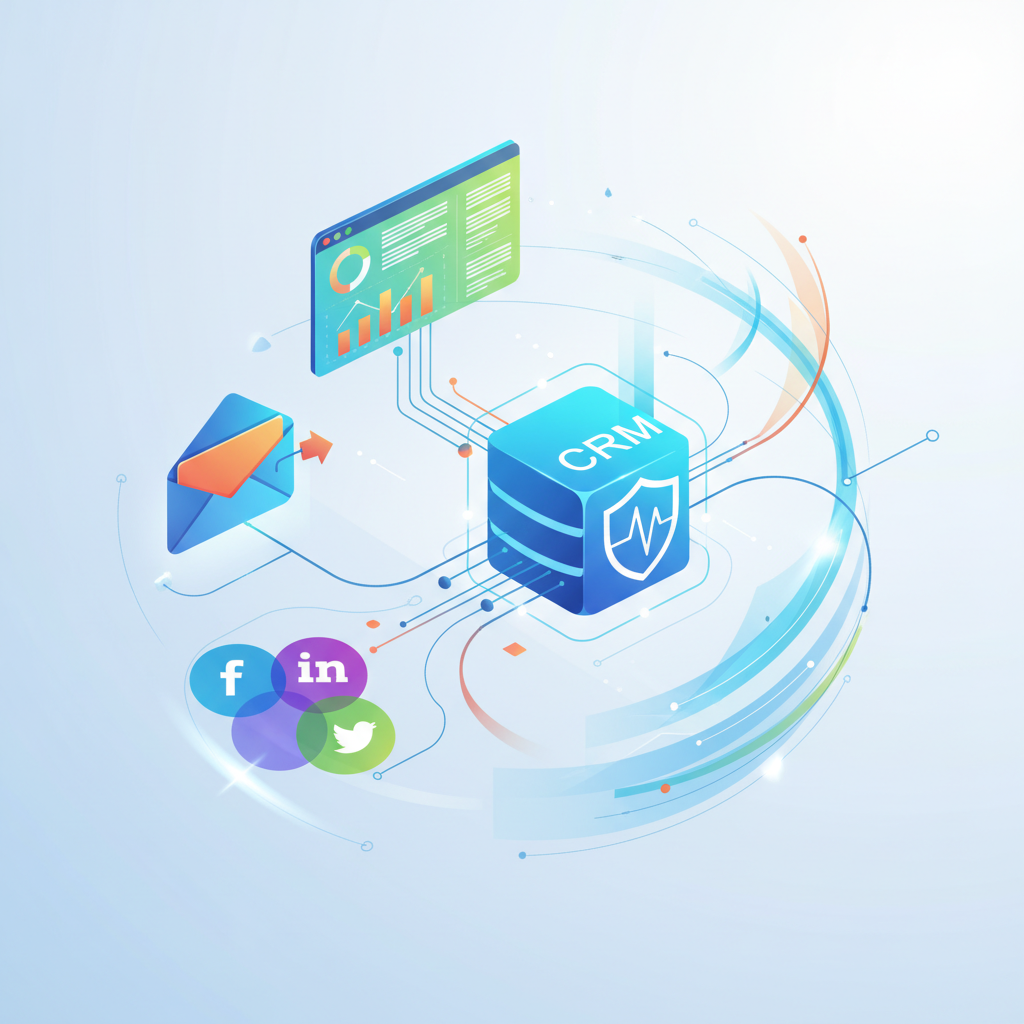
    A vibrant, abstract illustration showing different digital tools (email icon, social media icon, analytics dashboard) seamlessly connecting and flowing into a central CRM database icon, representing the integration of marketing automation with CRM. The background is clean and modern.

    Key Benefits of Implementing Marketing Automation with CRM

    Curious about the real-world advantages? Here are some compelling reasons why businesses are jumping on the Marketing Automation with CRM bandwagon:

    Enhanced Customer Understanding

    With all your customer data in one place, your marketing automation can segment audiences with incredible accuracy. You’ll know exactly who you’re talking to, what they’re interested in, and how they’ve interacted with your brand before. This leads to more relevant and impactful communications.

    Improved Lead Nurturing

    No more leads falling through the cracks! Marketing automation can automatically nurture leads based on their behavior and engagement, sending targeted content at just the right time. When a lead becomes ‘sales-ready,’ the CRM ensures your sales team gets all the context they need to close the deal effectively.

    Increased Efficiency and Productivity

    Automating repetitive tasks frees up your marketing team to focus on strategy and creativity. Imagine the time saved when your follow-up emails, lead scoring, and even social media scheduling are handled automatically. This boost in efficiency trickles down to better overall productivity.

    Better ROI Tracking

    Because all your efforts are connected, it’s much easier to track the effectiveness of your marketing campaigns. You can see which automation workflows are generating the most leads, which content resonates best, and ultimately, calculate your return on investment with greater clarity.

    Practical Applications and Use Cases

    So, what does this look like in action? Let’s explore some common ways businesses leverage Marketing Automation with CRM:

    Automated Email Campaigns

    • Welcome Series: Automatically send a personalized welcome email sequence to new subscribers.
    • Abandoned Cart Recovery: Trigger emails to customers who left items in their shopping cart.
    • Re-engagement Campaigns: Send special offers to inactive customers to bring them back.

    Personalized Customer Journeys

    Based on customer behavior recorded in the CRM, you can create dynamic content and specific journeys. For example, if a customer browses a particular product category, your automation system can send them related product recommendations or case studies.

    Sales & Marketing Alignment

    This is where teams truly unite. Marketing passes hot, qualified leads directly to sales, complete with a full history of their interactions. Sales can then leverage this info for highly personalized outreach, knowing exactly what the lead is interested in and where they are in their buying journey.

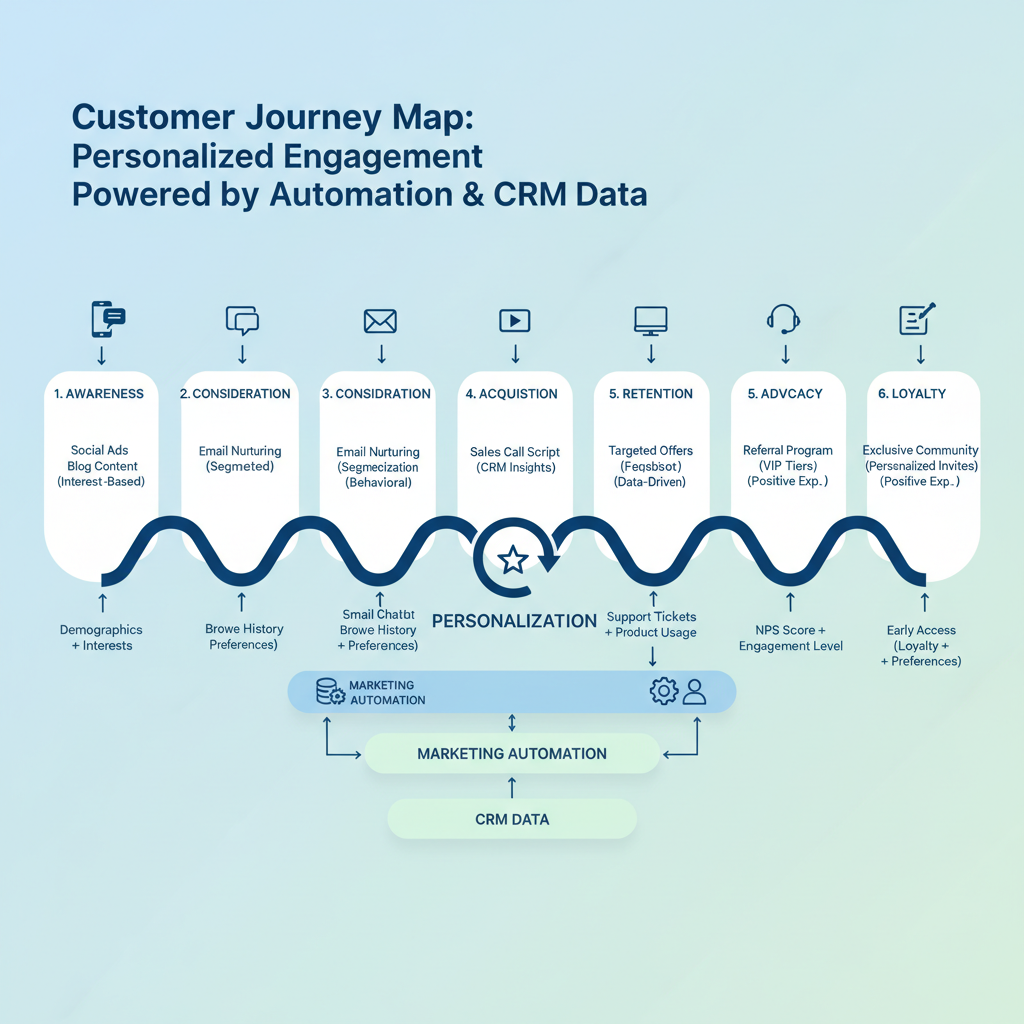
    A detailed infographic illustrating a customer journey map, from awareness to loyalty, with various touchpoints like social media, email, website visits, and sales calls. Each stage shows how marketing automation and CRM data collaborate to guide the customer effectively, with a focus on personalization.

    Getting Started: Tips for Success

    Ready to dive in? Here are a few tips to ensure your Marketing Automation with CRM implementation goes smoothly:

    1. Define Your Goals: What do you want to achieve? More leads? Better customer retention? Clear goals will guide your strategy.
    2. Clean Your Data: A CRM is only as good as its data. Ensure your customer information is accurate and up-to-date.
    3. Start Small: Don’t try to automate everything at once. Pick one or two key workflows to implement first, then expand.
    4. Train Your Teams: Ensure both marketing and sales teams understand how to use the integrated system effectively.
    5. Monitor and Optimize: Regularly review your automation performance and make adjustments based on the data.

    Ready to Transform Your Business?

    Adopting Marketing Automation with CRM isn’t just about adopting new technology; it’s about embracing a smarter, more efficient way of doing business. By automating your marketing efforts and centralizing your customer data, you’re paving the way for stronger customer relationships, increased sales, and sustainable growth. It’s time to let technology do the heavy lifting so you can focus on what truly matters: connecting with your customers and building a thriving business!

  • Unlocking Growth: Essential CRM Benefits for Small Businesses You Need to Know!

    Unlocking Growth: Essential CRM Benefits for Small Businesses You Need to Know!

    Unlocking Growth: Essential CRM Benefits for Small Businesses You Need to Know!

    Running a small business is a thrilling adventure, but it comes with its own set of challenges. Keeping track of customer interactions, sales leads, and marketing efforts can quickly become overwhelming. That’s where Customer Relationship Management (CRM) systems step in. If you’ve been wondering how to give your small business an edge, understanding the core CRM benefits for small businesses is your next big step.

    What Exactly is CRM?

    Simply put, a CRM system is a technology solution that helps you manage all your company’s relationships and interactions with customers and potential customers. The goal is simple: improve business relationships to grow your business. It’s not just a fancy database; it’s a strategic tool designed to streamline processes, enhance customer satisfaction, and drive profitability.

    Diving Deep into CRM Benefits for Small Businesses

    Let’s break down why investing in a CRM can be a game-changer for your growing enterprise.

    Build Stronger Customer Connections

    One of the most significant CRM benefits for small businesses is the ability to truly know your customers. A CRM centralizes all customer data – their history, preferences, past purchases, and communications. This means you can personalize every interaction, making customers feel valued and understood, which in turn fosters loyalty and repeat business.

    A small business owner smiling while looking at a laptop screen displaying customer profiles and interaction history, with a happy customer icon in the background, in a modern office setting, photorealistic.

    Supercharge Your Sales Pipeline

    CRM systems are incredible for sales teams. They help you manage leads efficiently, track their journey through the sales funnel, and identify opportunities for upselling or cross-selling. With automated reminders and clear visibility into each deal’s status, your sales reps can focus on selling, not on administrative tasks.

    Deliver Exceptional Customer Service

    Imagine quickly resolving customer queries because all their information is at your fingertips. CRM enables faster, more consistent customer support. Service agents can instantly access conversation history, past issues, and purchase details, leading to quicker resolutions and happier customers. This consistency is a huge one among the CRM benefits for small businesses.

    Master Your Data, Gain Insights

    Goodbye, messy spreadsheets! A CRM provides a centralized repository for all your customer data. This organization isn’t just neat; it allows for powerful reporting and analytics. You can gain valuable insights into customer behavior, sales performance, and marketing effectiveness, helping you make data-driven decisions for your business’s future.

    Optimize Your Marketing Campaigns

    With detailed customer segmentation based on demographics, purchase history, and engagement, your marketing efforts become incredibly targeted. CRM allows you to create highly personalized campaigns that resonate with specific customer groups, leading to higher conversion rates and a better return on investment for your marketing spend.

    Boost Team Productivity

    Automation is a key feature of modern CRM systems. From sending follow-up emails to scheduling appointments, many routine tasks can be automated, freeing up your team’s time. This means less manual data entry, fewer errors, and more time for strategic work, significantly boosting overall productivity.

    A diverse team of small business employees collaborating efficiently around a table, each looking at their own device, with subtle digital lines connecting them to symbolize a streamlined workflow, bright and modern office, photorealistic.

    Pave the Way for Future Growth

    As your small business expands, a CRM scales with you. It ensures that your customer management processes remain consistent and efficient, no matter how many customers you acquire. This foundation for growth is perhaps one of the most strategic CRM benefits for small businesses, allowing you to maintain a high level of customer experience even as you grow.

    Finding Your Perfect CRM Fit

    Choosing the right CRM for your small business involves evaluating your specific needs, budget, and desired features. There are many affordable and user-friendly options designed specifically for small and medium-sized businesses, so take the time to research and find one that aligns with your goals.

    Ready to Reap the Rewards?

    The CRM benefits for small businesses are clear and compelling. From enhancing customer relationships and streamlining sales to providing invaluable data insights and boosting productivity, a CRM system is no longer a luxury but a crucial tool for sustained growth and success in today’s competitive market. Don’t wait to give your small business the competitive edge it deserves!

  • Boost Your Bottom Line: How to Increase Sales with CRM Effectively

    Boost Your Bottom Line: How to Increase Sales with CRM Effectively

    Hey there, business owners and sales pros! Ever wonder how some companies seem to effortlessly grow their customer base and revenue? Often, the secret sauce is a powerful tool called CRM (Customer Relationship Management). If you’re looking to increase sales with CRM, you’ve landed in the right spot. A good CRM system isn’t just about storing contact info; it’s a dynamic platform designed to supercharge your sales efforts and foster stronger customer relationships. Let’s dive into how this incredible technology can transform your sales game!## Why CRM is Your Sales SuperpowerThinking about how to increase sales with CRM? It’s simpler than you might think. A CRM system acts as a central hub for all your customer interactions and data, giving your sales team an unparalleled advantage. It helps you understand your customers better, anticipate their needs, and personalize your approach.## Key Ways CRM Helps You Sell More### 1. Nurture Leads Like a ProCRM systems excel at lead management. From initial contact to closing, you can track every interaction, ensuring no lead falls through the cracks. This systematic approach is essential if you want to increase sales with CRM.

    A vibrant, detailed illustration of a salesperson confidently interacting with a customer on a digital tablet, with various data points and customer profiles floating around them, representing effective lead nurturing through a CRM system. The setting is modern and professional.

    ### 2. Streamline Your Sales ProcessForget manual tracking and endless spreadsheets. CRM automates many routine tasks, from sending follow-up emails to scheduling meetings. This frees up your sales team to do what they do best: selling! A streamlined process directly translates to more closed deals, helping you increase sales with CRM.### 3. Get Smarter with Data InsightsOne of the biggest advantages of CRM is its ability to collect and analyze customer data. You can gain insights into buying patterns, customer preferences, and sales performance. Imagine knowing exactly which products your customers are most interested in, or identifying your most profitable segments. These insights are invaluable for strategic decision-making and a surefire way to increase sales with CRM.### 4. Enhance Customer RelationshipsHappy customers are loyal customers, and loyal customers buy more. CRM helps you remember every detail about your clients – their past purchases, preferences, and communication history. This allows for highly personalized interactions, making customers feel valued and understood. Stronger relationships naturally increase sales with CRM over time through repeat business and referrals.### 5. Improve Team CollaborationNo more silos! CRM provides a shared platform where your entire team can access up-to-date customer information. Sales, marketing, and customer service can all work together seamlessly, ensuring a consistent and positive customer experience. This collaborative approach ensures everyone is on the same page, driving collective efforts to increase sales with CRM.## Essential CRM Features for Sales GrowthWhen choosing a CRM to increase sales with CRM, look for these crucial features: Contact Management: Centralized database for all customer information. Lead Scoring & Tracking: Prioritize hot leads and monitor their journey. Sales Pipeline Management: Visual representation of your sales process. Automation: Automate repetitive tasks like email sequences and task assignments. Reporting & Analytics: Generate custom reports to track performance and identify trends. Mobile Access: Empower your sales team to work from anywhere.## Tips for Maximizing Your CRM’s Sales ImpactReady to really increase sales with CRM? Here are some quick tips:1. Train Your Team: Ensure everyone knows how to use the CRM effectively.2. Keep Data Clean: Regularly update and cleanse your data for accuracy.3. Integrate Other Tools: Connect CRM with marketing automation, email, and customer service tools.4. Use Analytics: Regularly review reports to adjust strategies and identify opportunities.5. Personalize, Personalize, Personalize: Leverage data to create highly targeted campaigns and conversations.

    A diverse team of sales professionals collaboratively analyzing a visually rich CRM dashboard on a large screen in a modern office. They are pointing to various sales metrics, graphs, and customer segments, demonstrating effective data utilization for sales growth.

    So there you have it! Implementing a robust CRM system isn’t just an expense; it’s an investment that pays dividends. By streamlining processes, empowering your team with data, and fostering deeper customer connections, you’ll be well on your way to significantly increase sales with CRM. What are you waiting for? Start exploring the right CRM solution for your business today and watch your revenue soar!